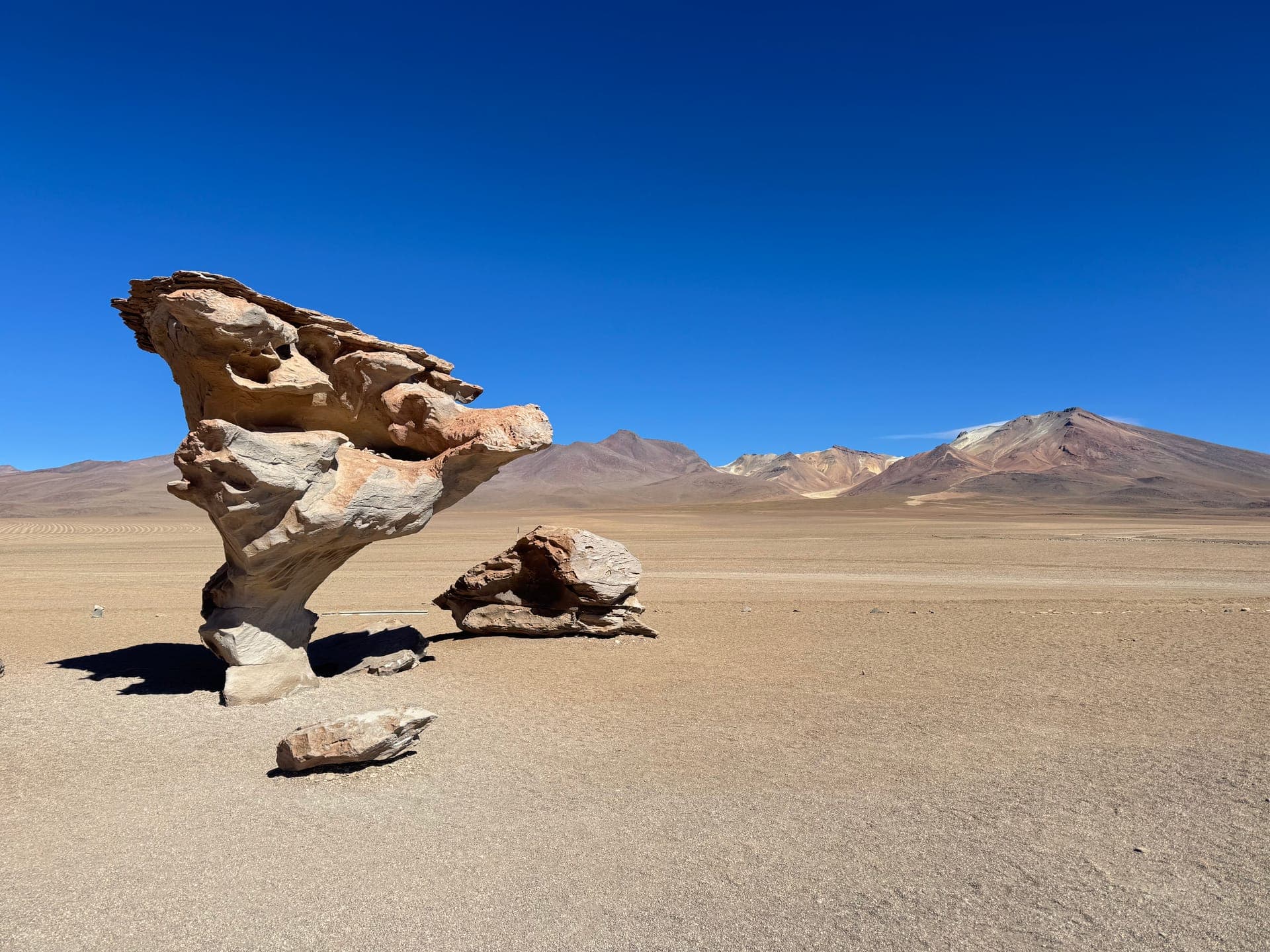
Lagoon Route: flamingos, Árbol de Piedra and water in the fuel
"We hadn't planned for water in the fuel. But we hadn't planned for the Bolivians either."
The lagoon route from San Pedro de Atacama to Uyuni. One of the toughest motorcycle tracks in the world: 450 km across the Bolivian altiplano without a gas station, -8°C at night and landscapes we never could have imagined.
San Pedro: maintenance and final preparations
Before the lagoon route, there's the logistics. Oil change on both bikes and new rear brake pads. San Pedro is too touristy and too small to find the parts or the tools. We tapped our Chilean network and dug up a garage in Calama, 100 km away. 20,000 pesos labor for the oil change, we decide to hand everything over to them. It saves us figuring out how to deal with the used oil.
We zip to the gas station before heading off to the garage. We run into a few Argentine riders there. They're in awe of the Himalayan, and even more of Adeline: a woman at the handlebars, wow! There she is, getting photographed. We swap contacts to get tips on Peru... we're not exactly early, the mechanic is waiting.
The desert between San Pedro and Calama is incredible. Then 80 km dead straight in the middle of nothing. We reach the garage around 11:15 and they take us in right away. By 3 p.m., it's ready. Thomas kept a close eye on the work, except the chain tension: a bit too tight, to adjust before leaving. In all, 30,000 pesos. It really wasn't worth the hassle. Burger King before heading off, some shopping for the crossing. We get back at sunset over San Pedro. It's gorgeous!
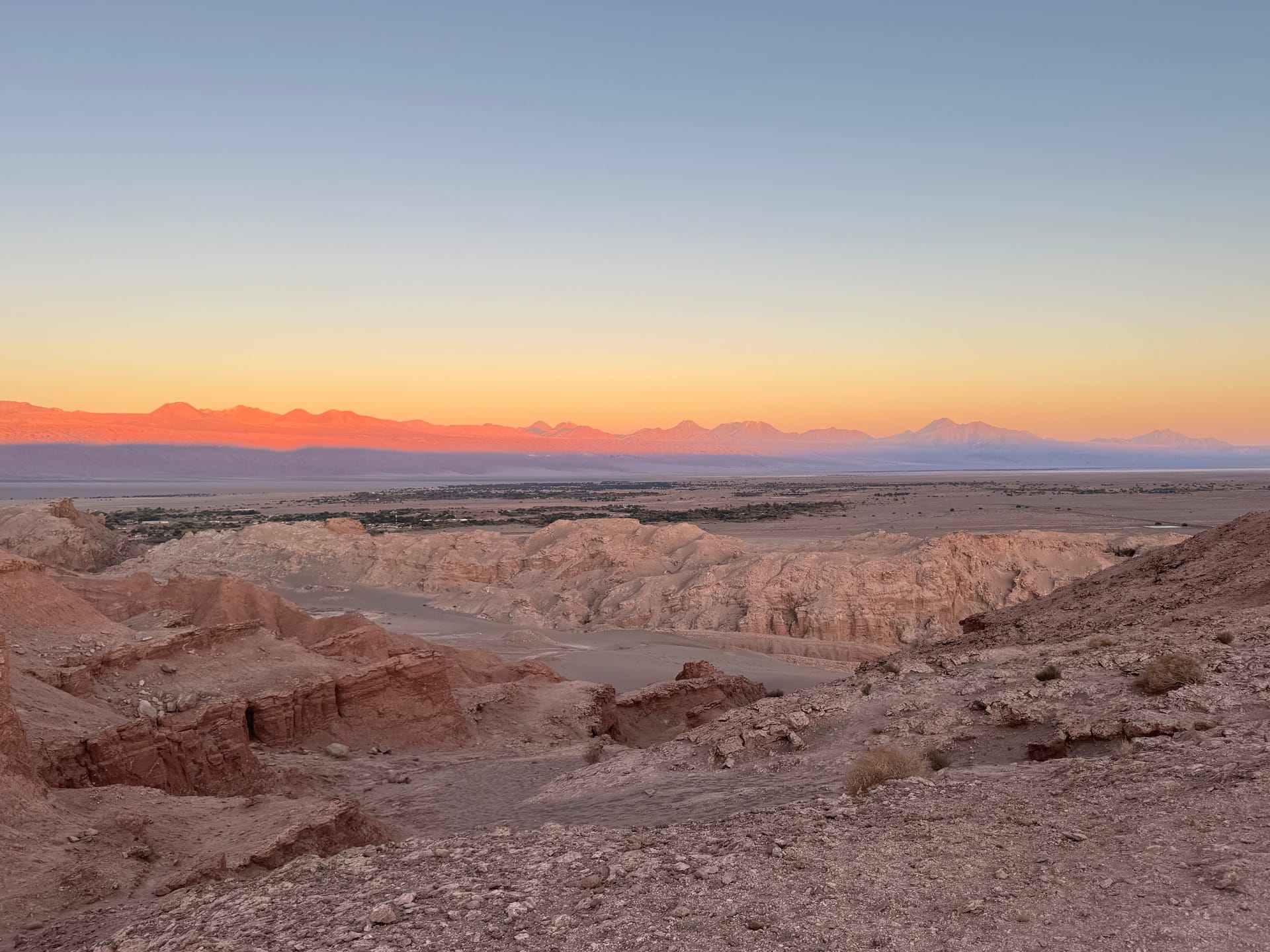
The OBD2 dongle, the laundromat and pre-departure nerves
The next day, day off. Adeline is awake at 8:30... Sleep-in failed. Off to the laundromat so we leave with clean clothes, the exchange office to get some bolivianos, then she goes and buys 12 liters of water: given the altitude waiting for us in the Bolivian altiplano, you have to hydrate hard to counter altitude sickness.
The lagoon route is something of a challenge, known as one of the toughest motorcycle tracks in the world: 450 km without a gas station, 4,500 m of altitude, deep sand, washboard and above all -8°C at night. We booked lodgings in advance, sleeping outside is out of the question. We'd hesitated about doing it, but the landscapes promise to be incredible, and Thomas wants to take on the challenge just to say "We did it!". So off we go, but it takes preparation.
At the end of the day, we watch a sunset in the desert and make a little recap video for friends. Some Germans show up right in the middle of the take, and after several attempts we finally end up happy with the shot. We head back to finalize the prep before the big departure, but we get a nasty surprise arriving at the lodging: Thomas's OBD2 dongle is dead, he no longer has the bike's data. It probably didn't appreciate the afternoon's detergent wash... The problem: riding at altitude without engine info is not ideal. He tries to fix it for a good part of the evening, with no luck. He ends up giving up, too bad. The panniers are packed, the electronics charged, the GPS track downloaded. There's nothing left to do but go.
Entering Bolivia
Well, here we go... The alarm rings. The tension is palpable, we don't say it to each other, but you can feel it. At 10, we fill up both bikes plus 20 spare liters, food and water. We're loaded like mules. We ride 40 km of pavement to reach the Chilean border. We go from 2,300 to 4,200 m over 40 km, it climbs hard. The Chilean side goes quickly. Bolivian immigration in two minutes. Customs takes a bit longer, but it's a formality. We pay the park entrance ticket, and there it is, we're in Bolivia!
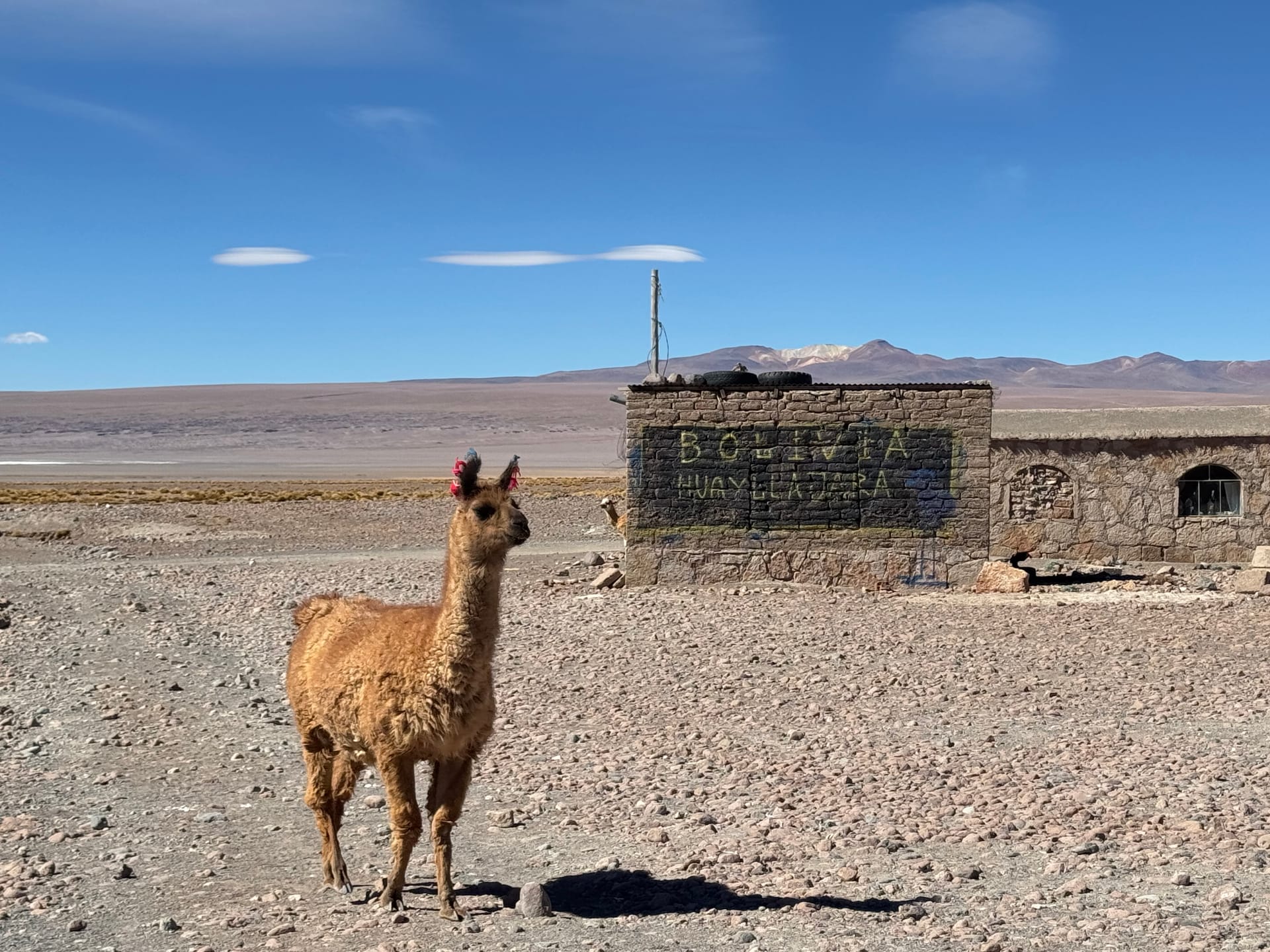
We get washboard right from the start, as expected. We handle it well. The landscapes are incredible. We're really in the middle of nothing... and that's exactly what we wanted.
Chalviri Lagoon and hot springs at 4,500 m
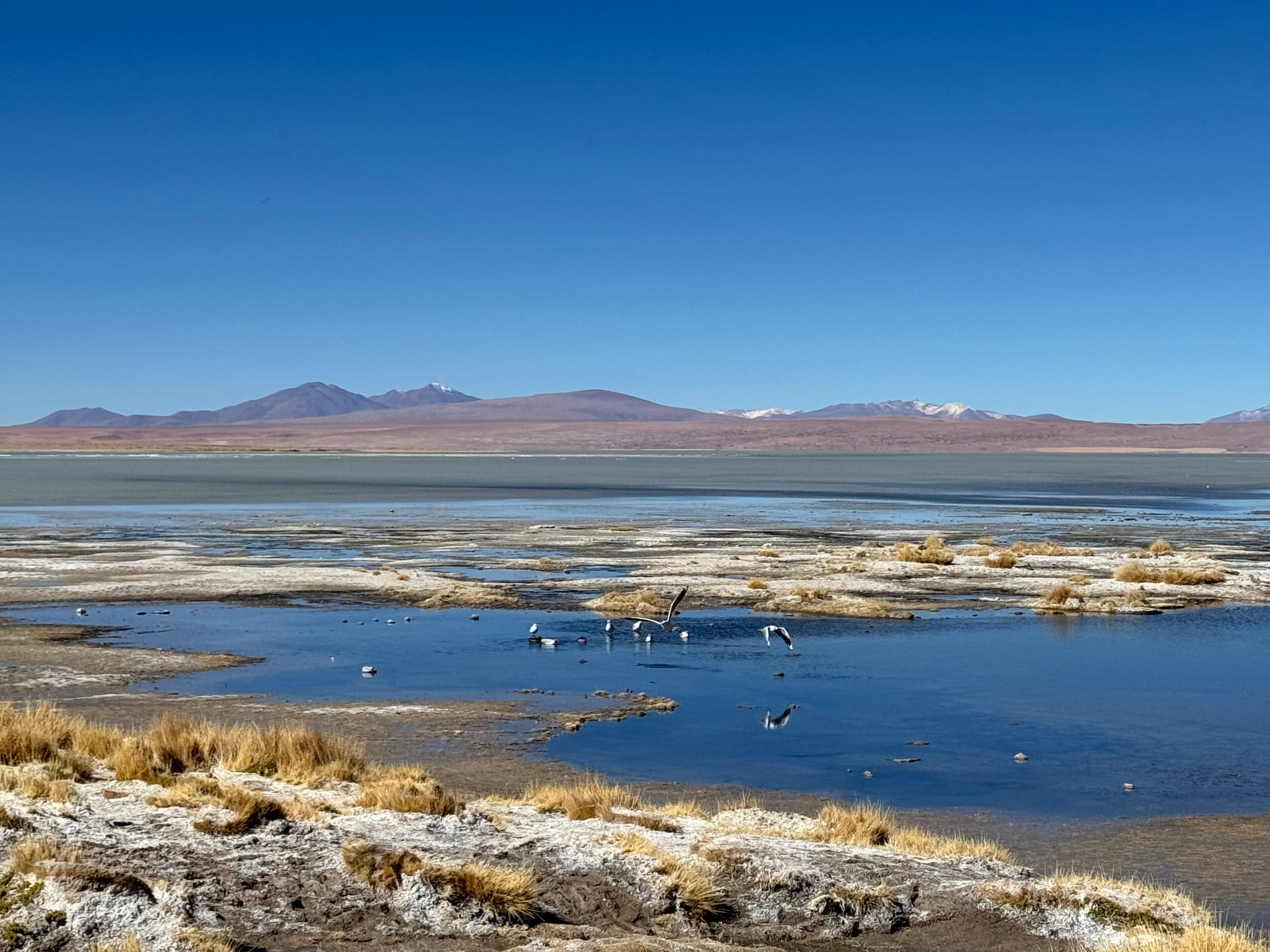
We reach Chalviri Lagoon at 2 p.m., the first stop. The track wasn't so complicated after all, we're relieved to be here early. The hotel we'd spotted costs us 500 bolivianos a night. It's not cheap, but sleeping outside with -8° forecast is out of the question.
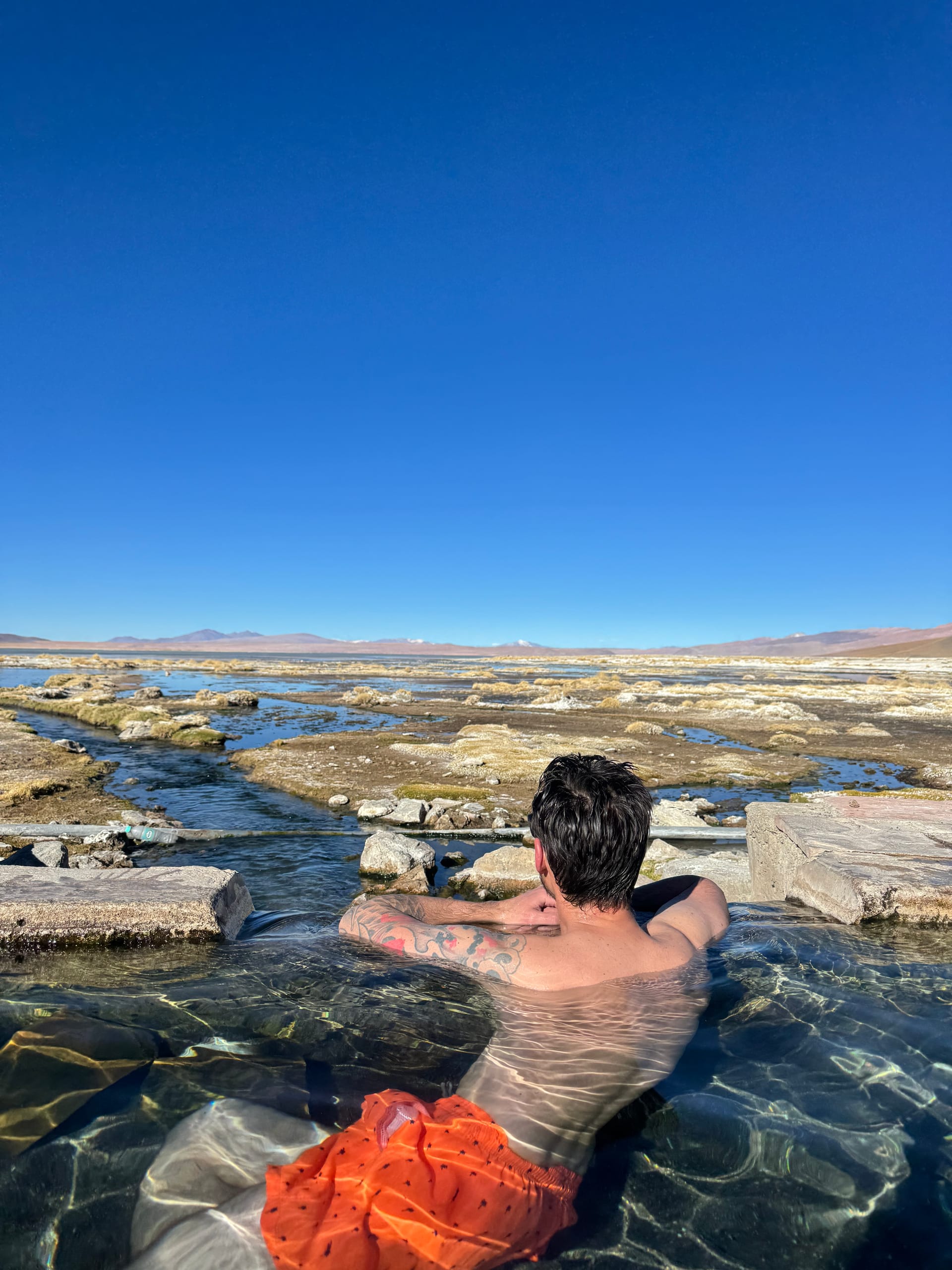
We drop our things and picnic outside. The tourists leave after lunch, we find ourselves almost alone. In the afternoon, we test the hot springs: 30 bolivianos per person. Damn, what bliss. The water is hot and clear, volcanoes all around, the setting is incredible. We come out two hours later. The sun hides... Instant deep cold.
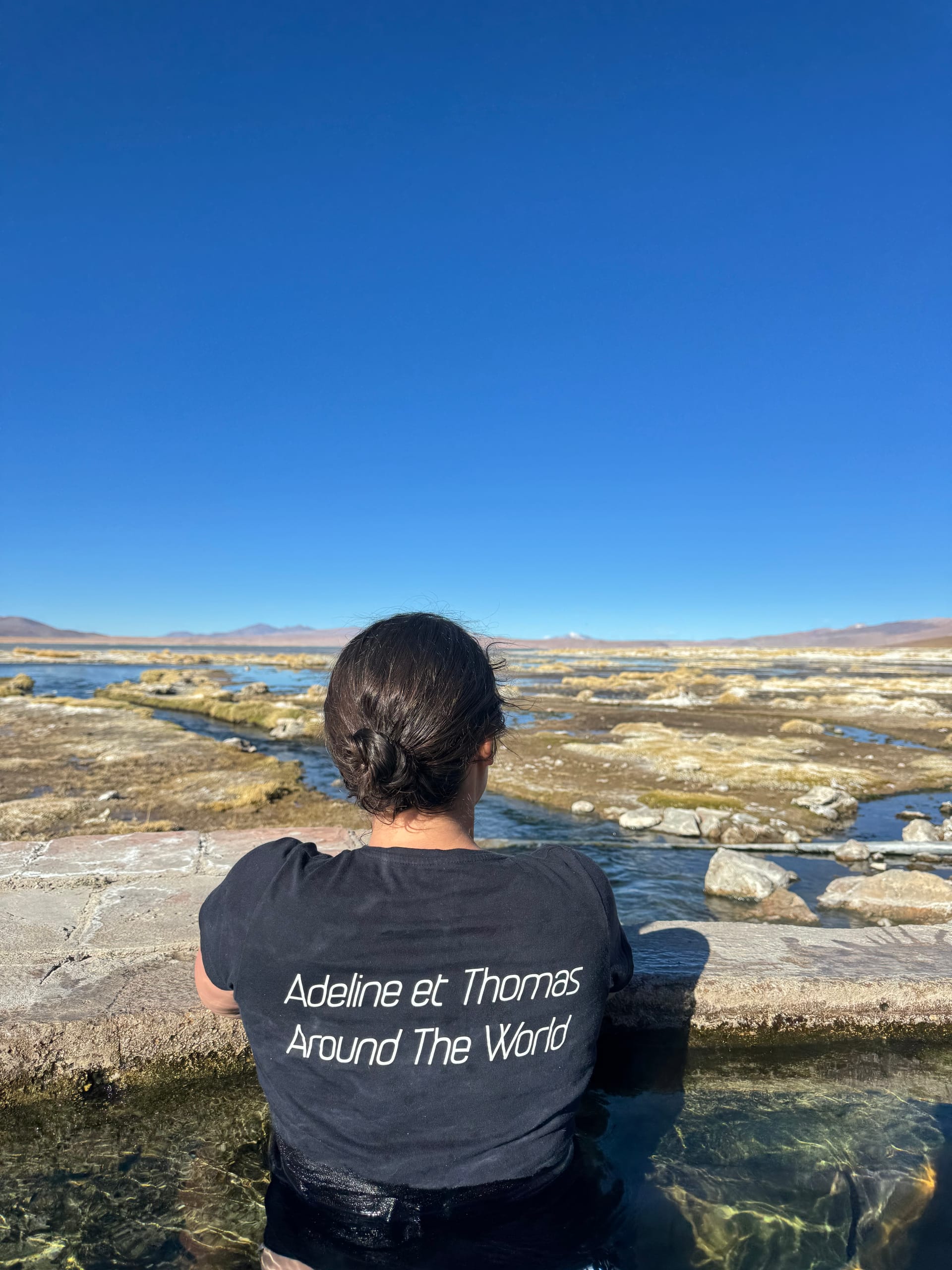
We order hot water from the hotel, 20 bolivianos, here everything costs. We make instant noodles to save on dinner. Thomas works on a blog article in the common room until the crowd of tour operators shows up around 6 p.m. Adeline reads in bed under three blankets. We try for the stars around 10 p.m., but it's too cold to linger. Off to bed, every layer on our backs, because of course there's no more electricity once the sun is down, so no heating.
Laguna Colorada and the flamingos at the end of the washboard
The next day, we wait until 10 for the sun to warm things up a bit. The bikes got frosted over, the riders too. Lots of washboard along the way, the track isn't easy, but we have good fun. The landscapes are magnificent, Thomas films everything he can.
Around 12:30, we drop our things at the Árbol de la Piedra hotel. No kitchen at midday, so we knock on the door of another inn. After some back-and-forth, they agree to make us a meal: 60 bolivianos for two, that's fair. Around 3 p.m., off to Laguna Colorada, just 5 km away. Except we don't draw the right number on the track side — yes, because there are so many tracks you have to choose, and it's a bit of a lottery on the state of the washboard and the depth of the sand... What a slog! And a crazy wind on top of it all.
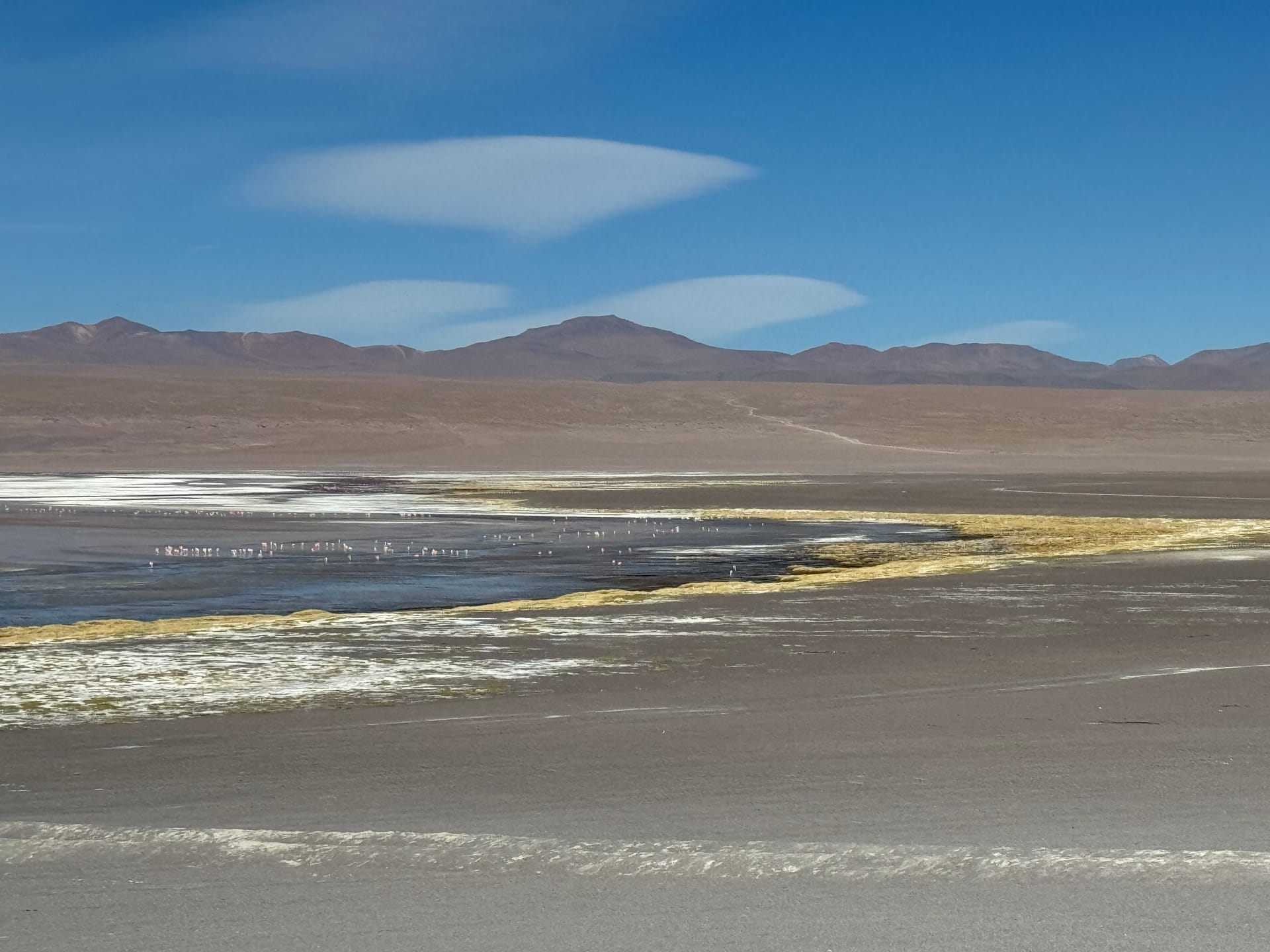
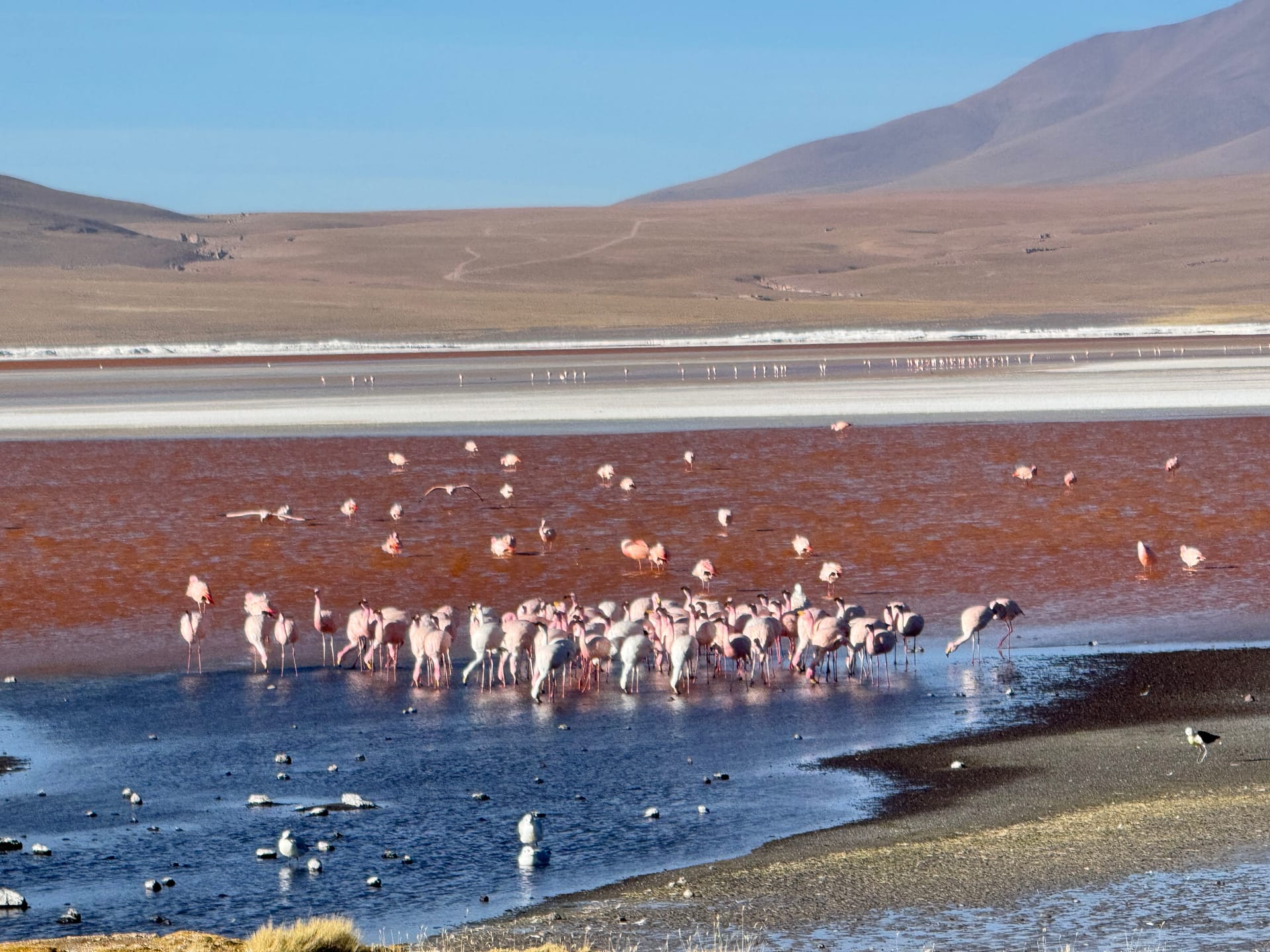
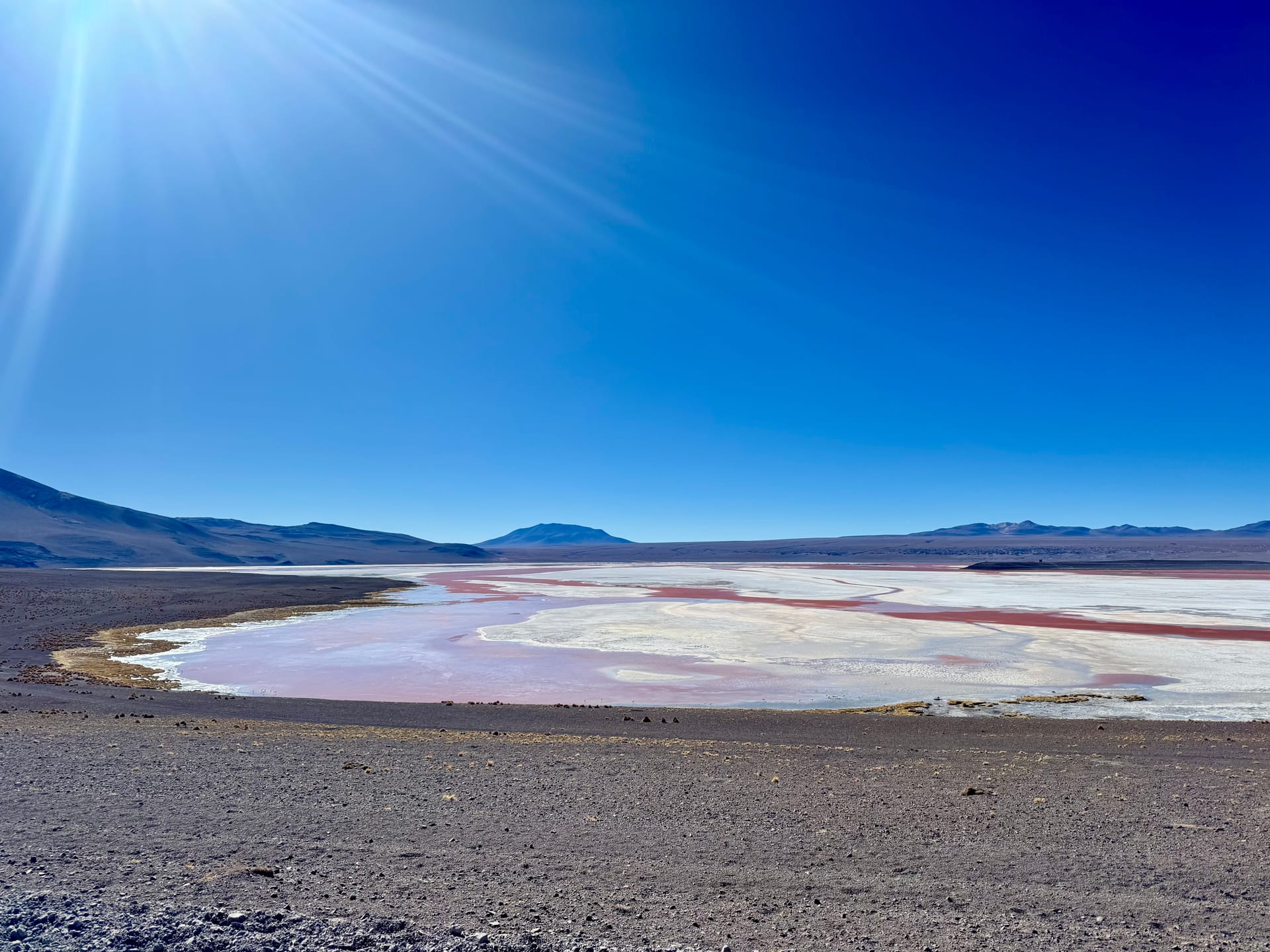
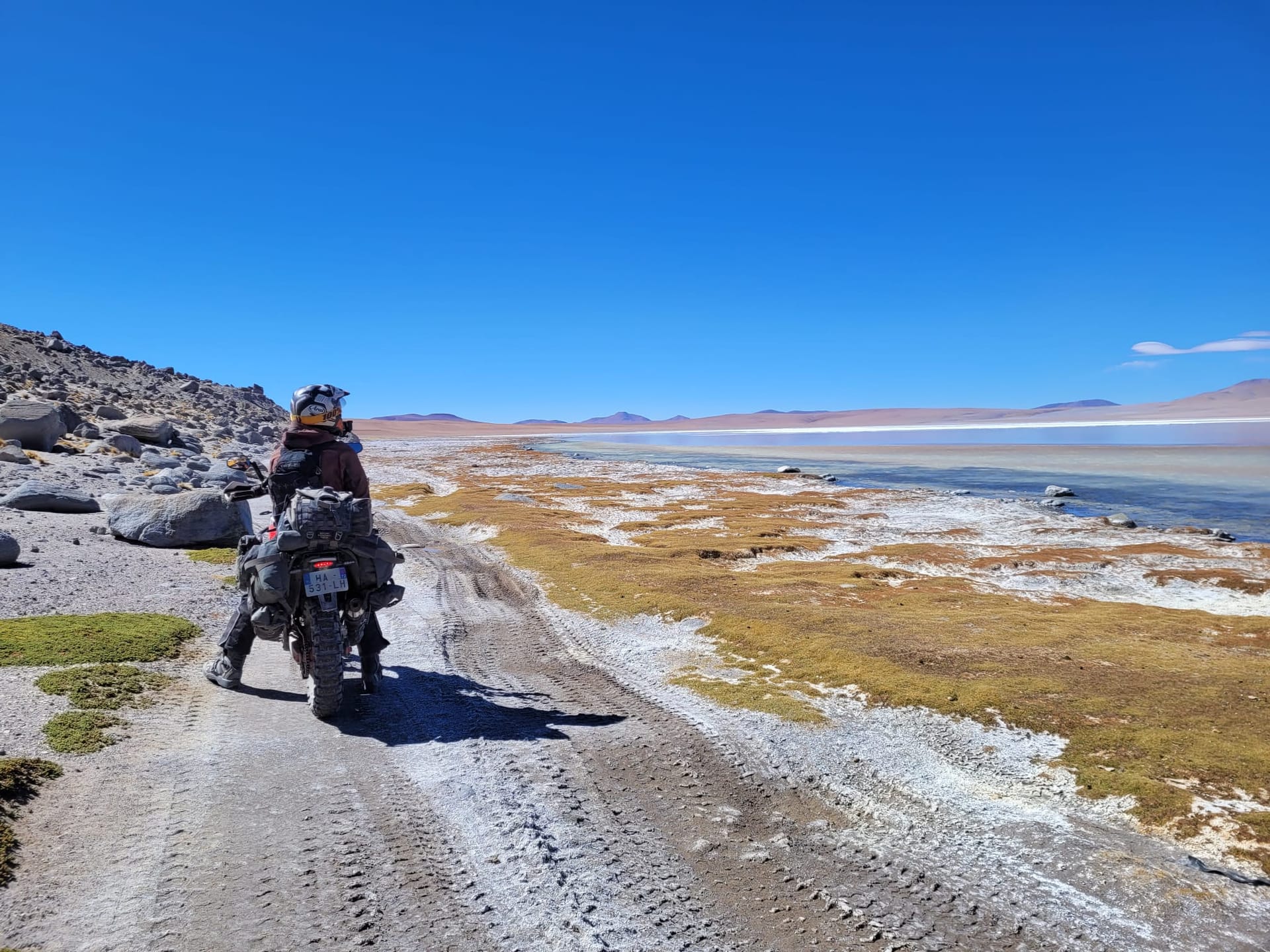
We arrive 30 minutes later, after a few heart-stopping moments. Thomas has to turn his bike around so it doesn't tip over from the wind. And there, we see them... The flamingos. Dozens, even hundreds. The red lagoon, the flamingos, the volcanoes behind. It was hard, but the spectacle is incredible.
Back to the inn by a different track: less washboard, but rock. Hell. We arrive around 5:30 p.m., it's already cold and there's no heating except a little stove in the entrance. A group of tourists in 4x4s rolls in and complains about being cold... We poke a little fun at them. We chat with Alain, a Frenchman traveling in the area. Dinner at 25 bolivianos per person, bed at 7:30 p.m., lights out at 8:30 p.m. Even at the hotel, it's clearly an adventure.
The Árbol de Piedra and the hardest day
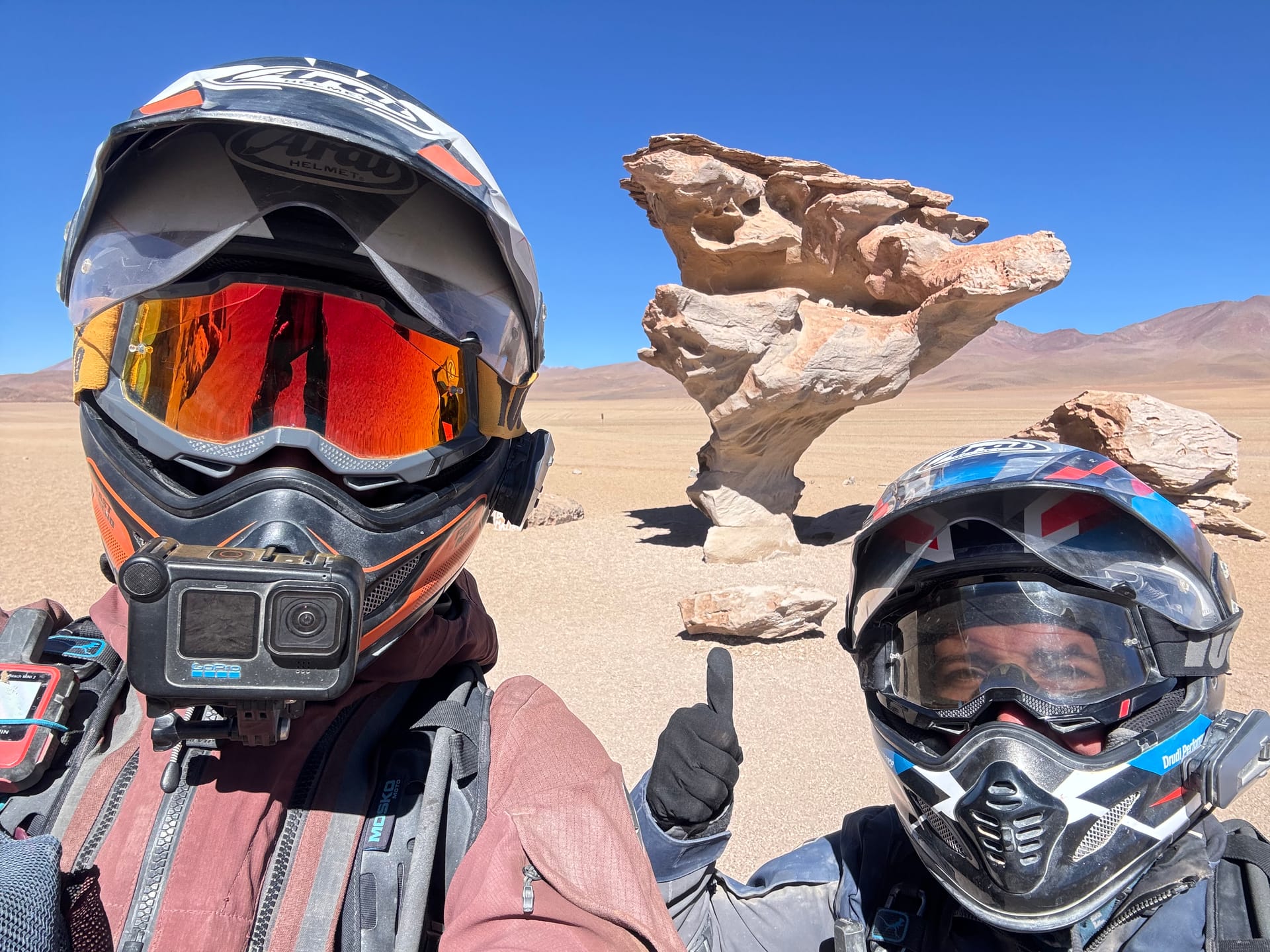
In the morning, target Villa Alota at 150 km. After the Árbol de Piedra, the track is supposed to be easier. Departure at 9:30 despite the cold. We pick up the previous day's track and quickly reach Laguna Colorada. Then the Árbol de Piedra.
Arriving there is another universe. Sand dunes, volcanic rock, peaks all around... It's like being on Tatooine. We're both moved. Being here, in the middle of these vast open spaces, is indescribable: the experience of a lifetime.
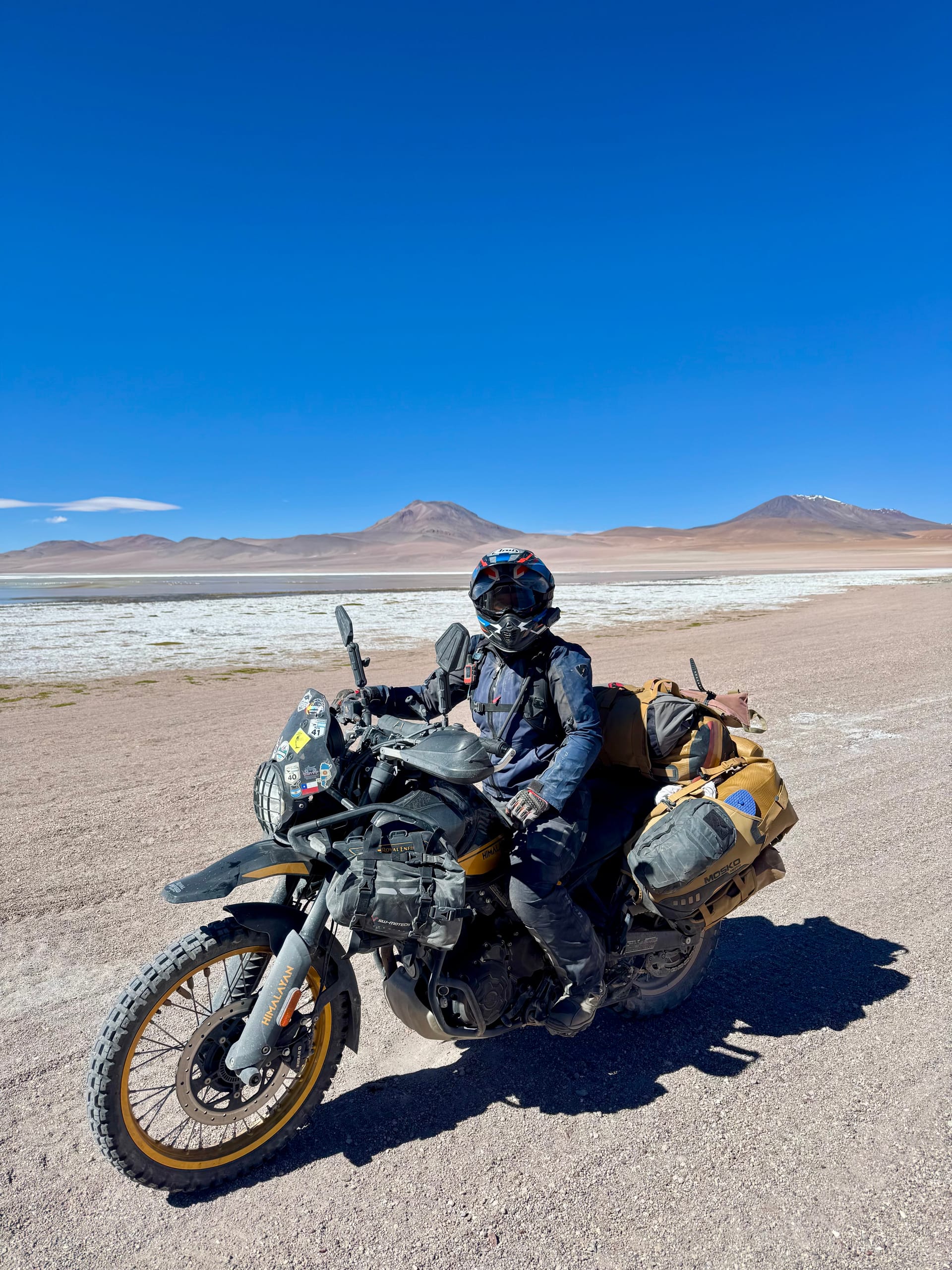
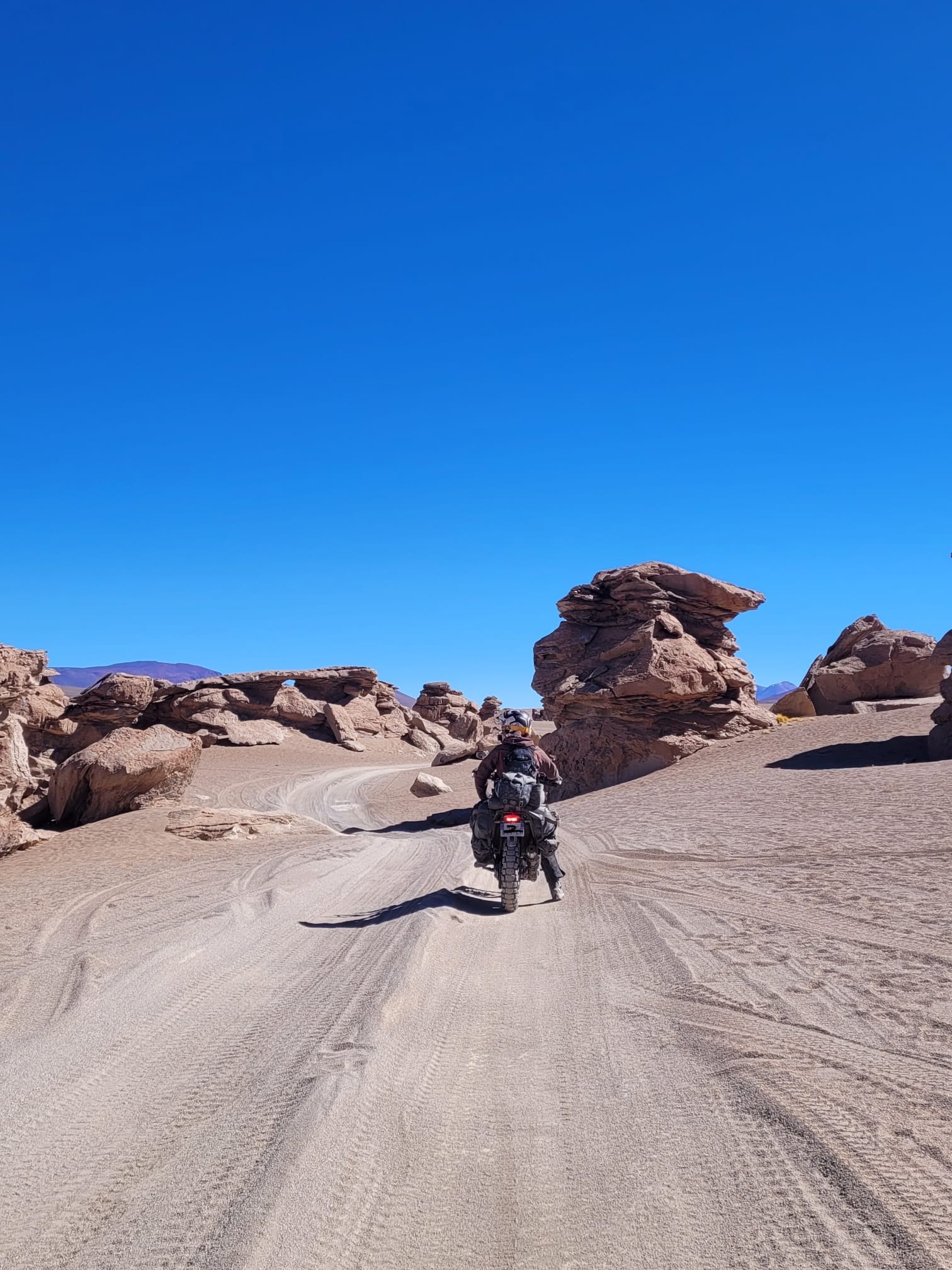
And then, in theory, it gets easier afterward. In theory. In practice, we suffer all day long. Yes, there are fewer tracks torn up by the 4x4s. Yes, there's less washboard, but sand and stones non-stop. We fall, we get back up, we hunt for the best line. It's the hardest off-road we've done, mostly because of the infernal wind. At 2:30 p.m., forced break: cereal bars, applesauce, bananas. We take 30 minutes to catch our breath and figure out where we are, then we set off again.
By 5:30 p.m., we only reach Hedionda Lagoon. There are 60 km left, including 30 km of trail. Seven hours of riding in our legs and night threatening, we stop there. The hotel is 300 $ a night. Adeline negotiates, we go from 300 to 200 $. We'd have loved to avoid it, but too bad, we resign ourselves, we're wiped, physically and mentally. But damn, was it beautiful. Instant noodles to avoid the 40 $ menu, then off to sleep.
Water in the fuel and the Bolivians
Last day on the lagoon route. At the price of the hotel, we hope breakfast will be hearty: it is, yum. Two employees want a photo with Thomas, they think he looks like Harry Potter... that thing has followed him around since the films came out 30 years ago...
30 km of still-technical trail, less sand but more rubble. Then the pavement. Relief. At Santa Cristóbal, the Himalayan starts crying hunger: only 50 km of range left. The station has a huge queue. Adeline tries to cut in front and as a foreigner on a motorcycle, it works.
Five minutes later, the Himalayan dies and refuses to restart. A car stops: there's apparently water in the fuel. Damn. We have to drain both tanks... the Bolivian experience in all its glory!
Adeline flags down a passerby to find out if there's a garage nearby and goes to ask them if we can set up at their place. The car garage agrees to lend us a corner of its space, phew, it spares us having to work in the street. Rodrigo, a local, offers to supply us with fuel once the tanks are drained. We push the bikes 500 m, including 300 m of gravel uphill. Rodrigo pushes the Himalayan at a run to keep the momentum. Adeline tries to keep up: the altitude, the helmet, the gear... It burns the lungs.
At the garage, we easily empty Adeline's tank. It's confirmed: half water, half fuel. Thomas's is more complicated to empty, you'd have to take apart the whole rear end... we decide to siphon it with a pump. The mechanics and the mechanic's wife get to work without us asking for anything. Pump, pliers, cloth and off we go. By 5:30 p.m., everything is ready. We fill up with Rodrigo's fuel... and the bikes won't start: there's water in the injectors.
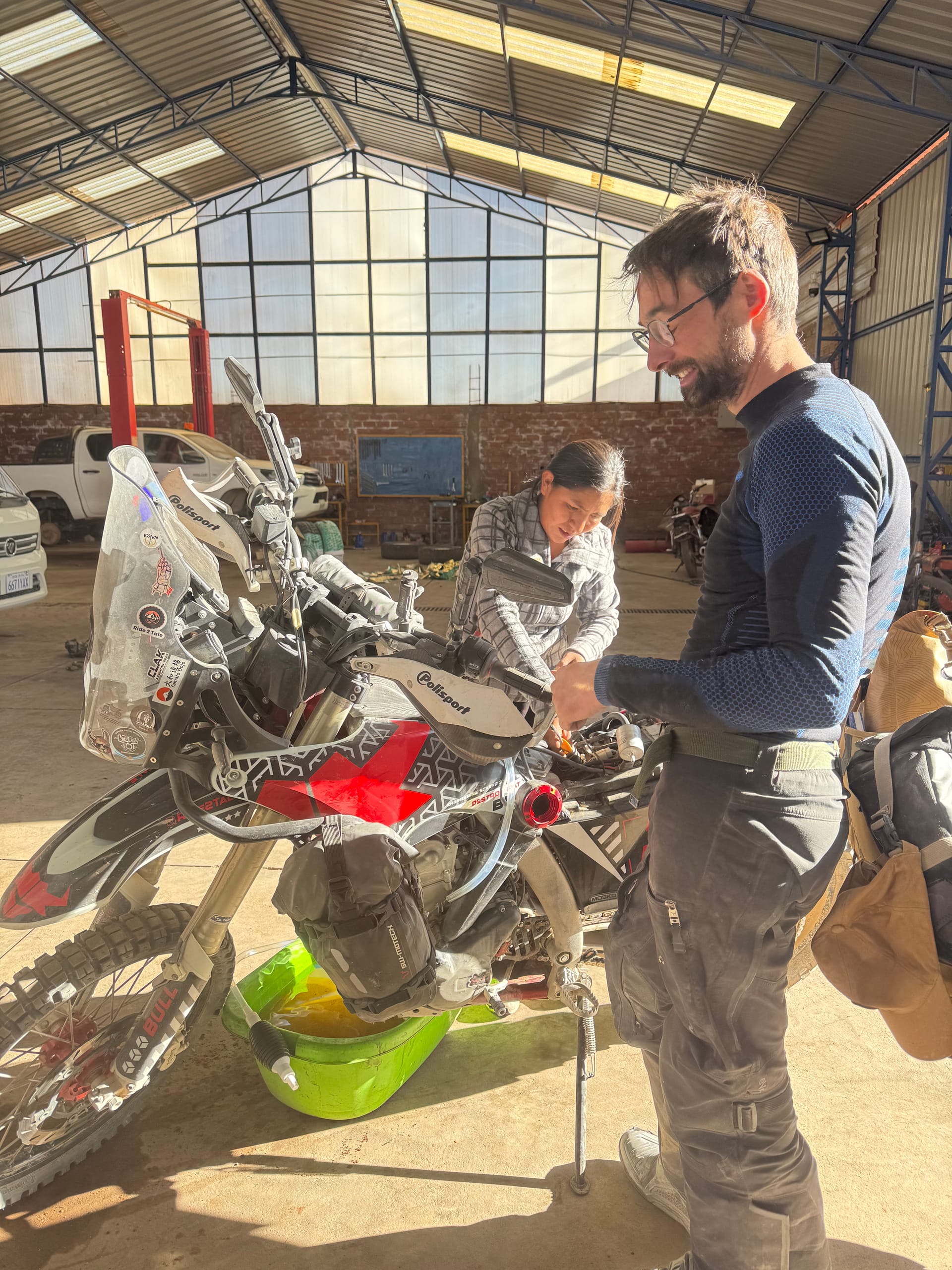
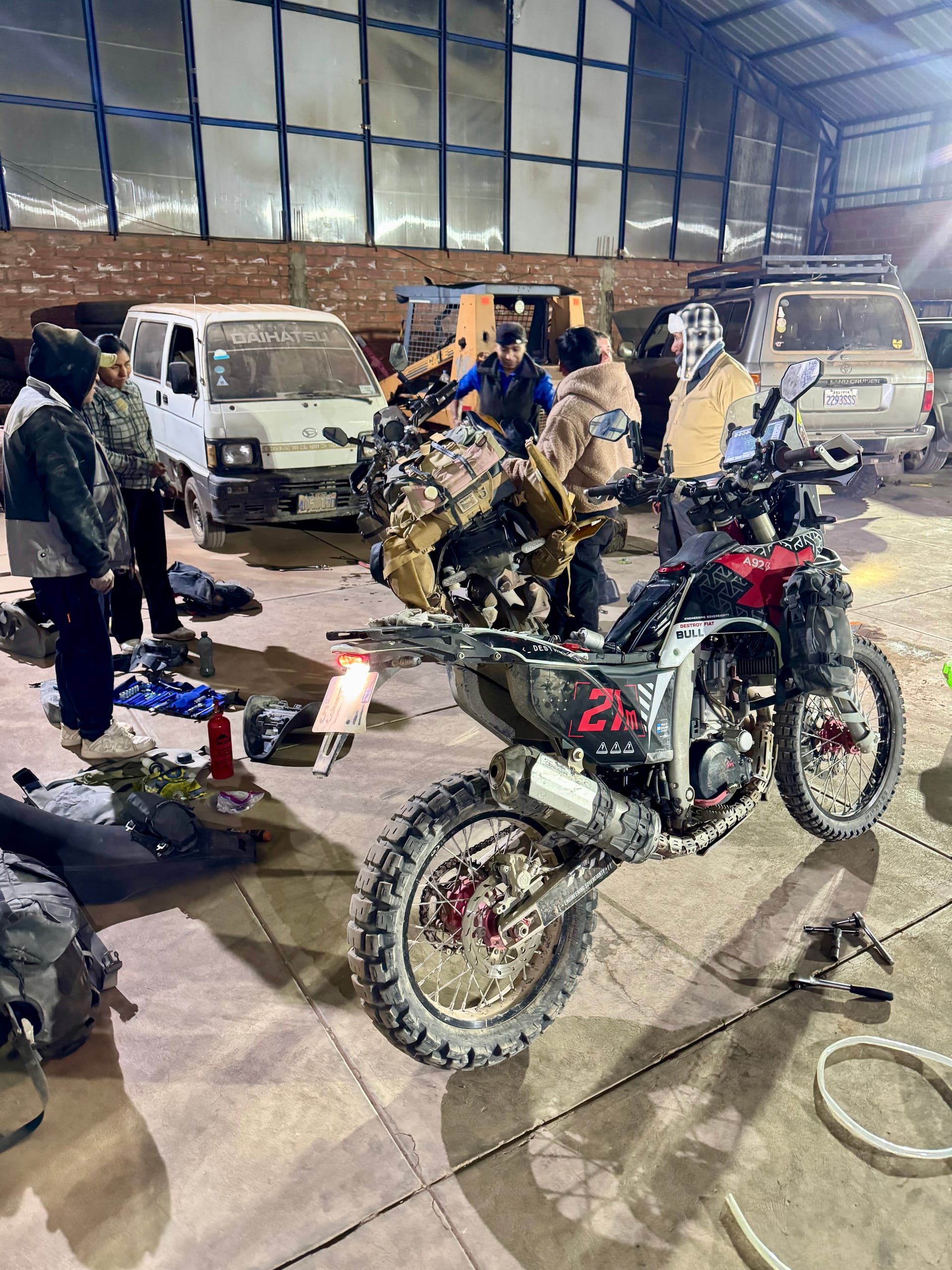
We message Gaétan in France, it's midnight over there. All the mechanics are gathered around the bikes helping Thomas. The technique they recommend is identical to Gaétan's. An hour of collective work, we end up purging everything — fuel pumps, injectors, spark plugs, and then... it starts. Total relief.
Too late for Uyuni. We let the hotel know, and the mechanics point us to a place to sleep. The garage owner offers to keep the bikes for the night. We accept and head off to collapse. Bolivia starts strong, but thanks to this ordeal we discovered the Bolivians: Rodrigo, the mechanics, the garage owner. An unwavering kindness, without us asking for anything. Getting back to the hotel, the shower is clogged. Thomas starts bailing the water out of the tray with a glass... Definitely something with water today.
Follow our adventures
Get an email for every new article.