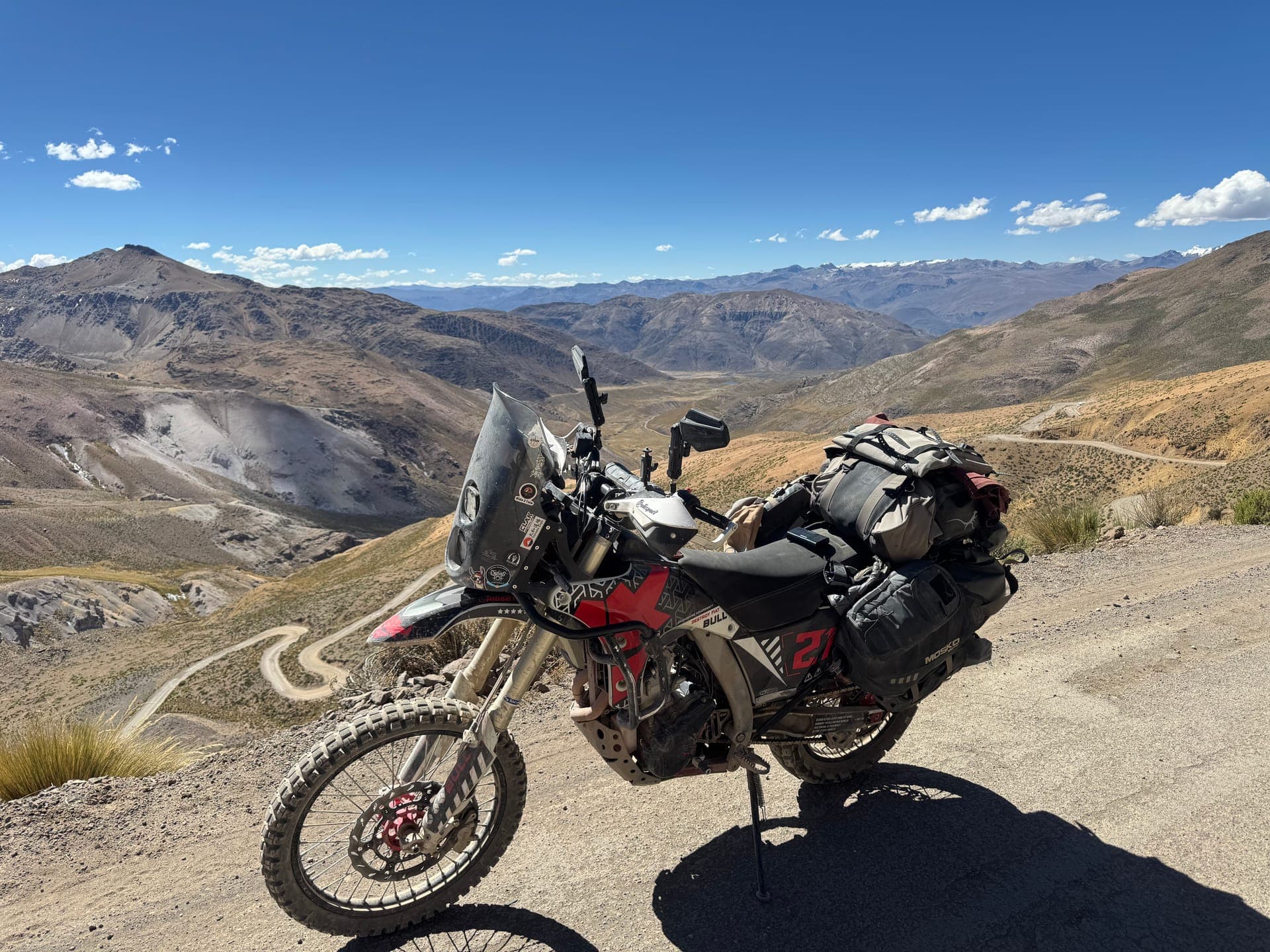
Peru by motorcycle: Colca and Cotahuasi canyons, then Ica and Lima
"We love Peru. But Peru wears us out."
While Adeline's parents head to the Colca Canyon by bus, we pick up the bikes from the garage in Arequipa. On the program: the Colca and Cotahuasi canyons, then the coast down to Ica and a detour to Lima. Jaw-dropping landscapes, but logistics that exhaust us.
Back on the road and the Colca Canyon
June 27th, we're back on the road! At 9:15 we're at the garage, not bad for us. By 10:15 everything is packed and we're ready to leave, except two French riders show up and start chatting about travel with us. When we finally decide to go, Thomas's bike refuses to start: the battery needs a boost. In the end, we really get going at 11:15.
Getting out of Arequipa takes more than an hour. Traffic jams, blind overtaking on the mountain road... we grit our teeth. We stop for lunch at a very touristy restaurant, we even see tour buses pull up, and you can feel it in the prices: 30 soles a dish, more than usual, but we eat very well. In the afternoon, the traffic calms down and the landscapes become incredible. At the entrance to the Colca Canyon, we hit a checkpoint where they ask for 70 soles per person. A fortune, when all we want is to use the road. After some discussion, they let us through on condition that we don't come back tomorrow. Noted! We reach Cabanaconde at 5:15 p.m., pizza, bed. Getting back on the road is tiring.
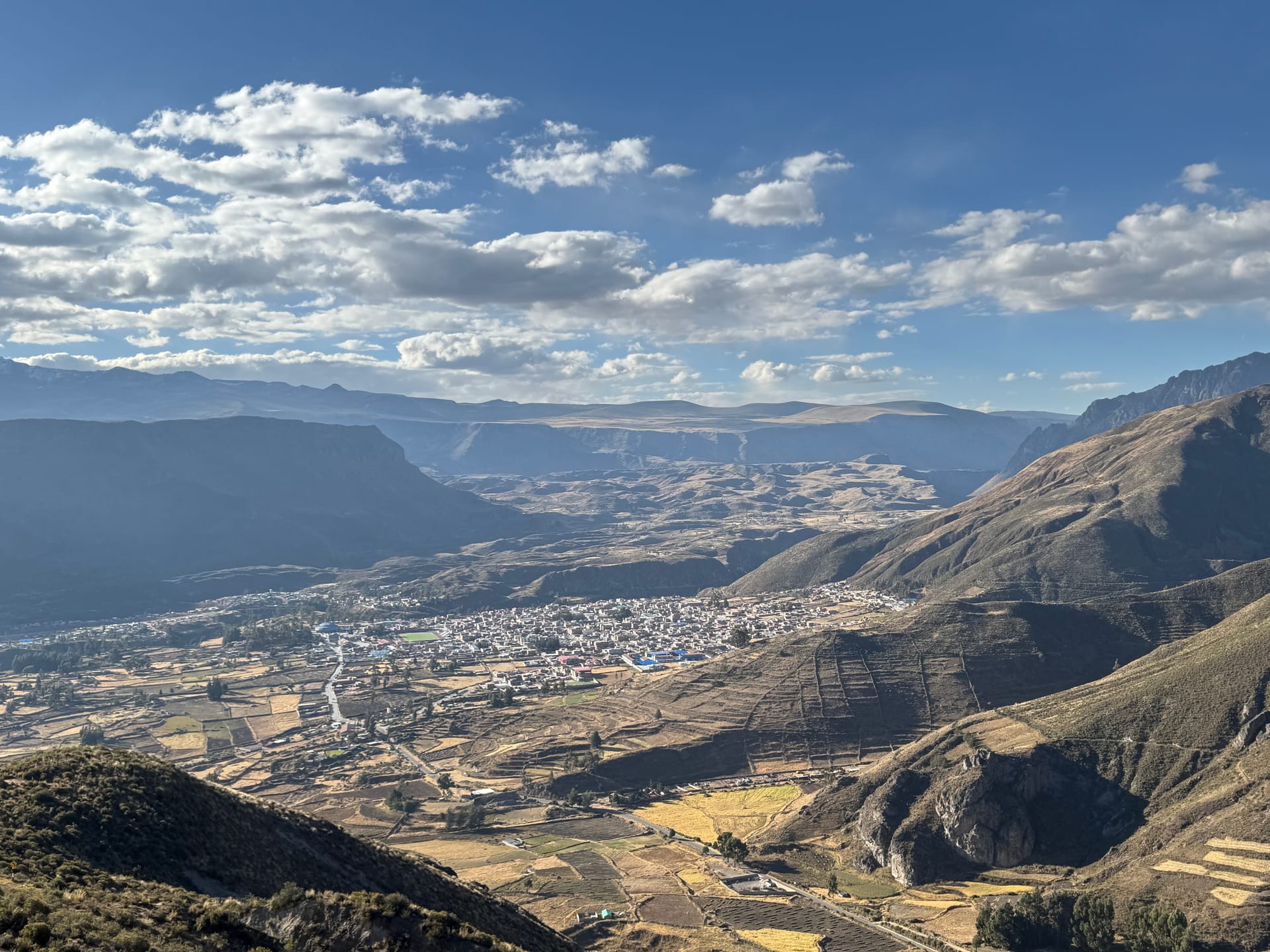
A flat tire on the village square
The next day, we manage to leave at 9:30, almost a feat. We ride along the canyon on a track that isn't difficult, apart from the drop right next to it, which is quite impressive. The scenery is magical, we love it. And we don't know why, but after Ayo, in the middle of nowhere, the track turns into a paved road. That lets us speed up, well, not for long: coming out of a bend, Adeline sees that Thomas has a flat rear tire. "Ah yes, the handling did feel weird." No kidding, the tire is completely flat.
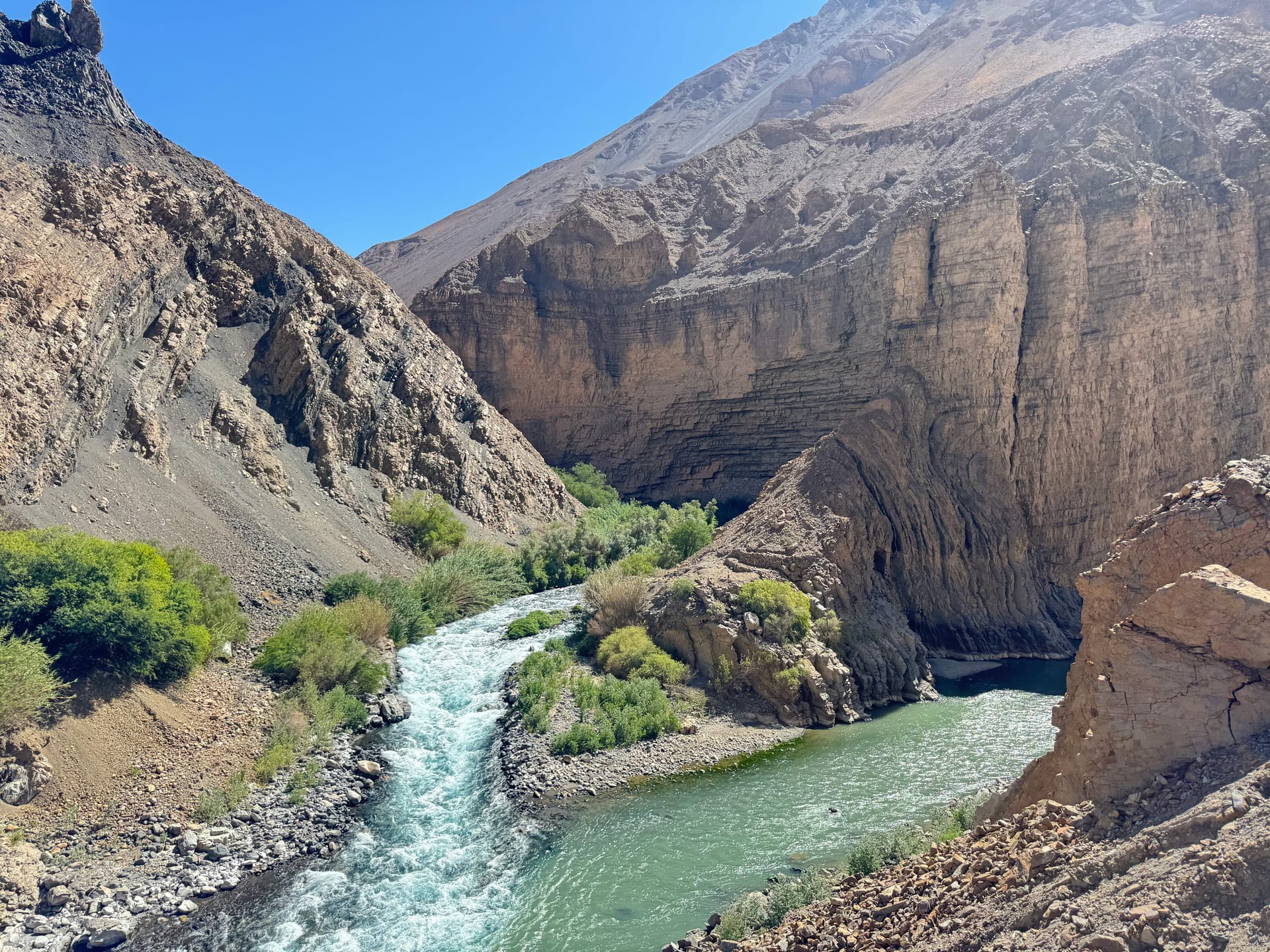
It's very hot and we're in the middle of nowhere. So we decide to turn back to the village we passed 5 km earlier. We saw a llantería there, a tire repair shop. Except it's closed and the guy doesn't answer on WhatsApp. It's 1:30 p.m. and we're starving. We decide to set up on the village square to fix the tire, but first we go and eat. We find a small restaurant, but there's not much left to eat. The lady tells us she wasn't expecting us (neither were we, honestly) but offers us rice with vegetables, avocado and chicha morada. Perfect.
At 2 p.m., still no news from the llantería. So we tackle the inner tube change on the village square. Thomas is already struggling to loosen the wheel, and with stiff tires it's really not easy. We try to remember how we did it with Gaétan. Eventually, with patience, we manage to remove the wheel and change the inner tube, but time is flying and it seems wiser to sleep here tonight. Adeline goes off to book a room, hoping we have enough cash, because we only have 100 soles left.
After three hours of tinkering, the new inner tube is in. We helped each other without too much bickering, and we're super proud of ourselves.
Of course, that's exactly when the llantería guy shows up, tipped off by a lady from the village. We didn't exactly go unnoticed. He helps us with the end, but he works like a brute and Thomas double-checks everything after him, chain tension included. At 6:30 p.m., it's finally done. Four hours in total, but we did it. We try to see if the old inner tube can be repaired, but it's riddled with tiny holes, beyond saving. We just hope they came from riding on the flat, otherwise we'll be in trouble getting to the next motorcycle shop. In the evening, the restaurant is closed, so we make pasta on the camping stove. Exhausted, by 9:30 p.m. we're in bed and asleep!
Cotahuasi, the never-ending canyon
The next morning, we're relieved: the tire held its pressure. We head for Cotahuasi, on a stretch the police call a "road" and then a "track". We struggle to see the difference: sand in every bend, bumps everywhere. But trucks get through, so why not us. In Cotahuasi, the bank is closed. We still manage to withdraw cash at a small office, with 10% fees, because we're seriously broke. With all that, we're running late and have chicken and fries for lunch at 4:30 p.m. Totally normal. We use the end of the afternoon to pamper the bikes: chains, air filters, stickers. They're ready to go again.
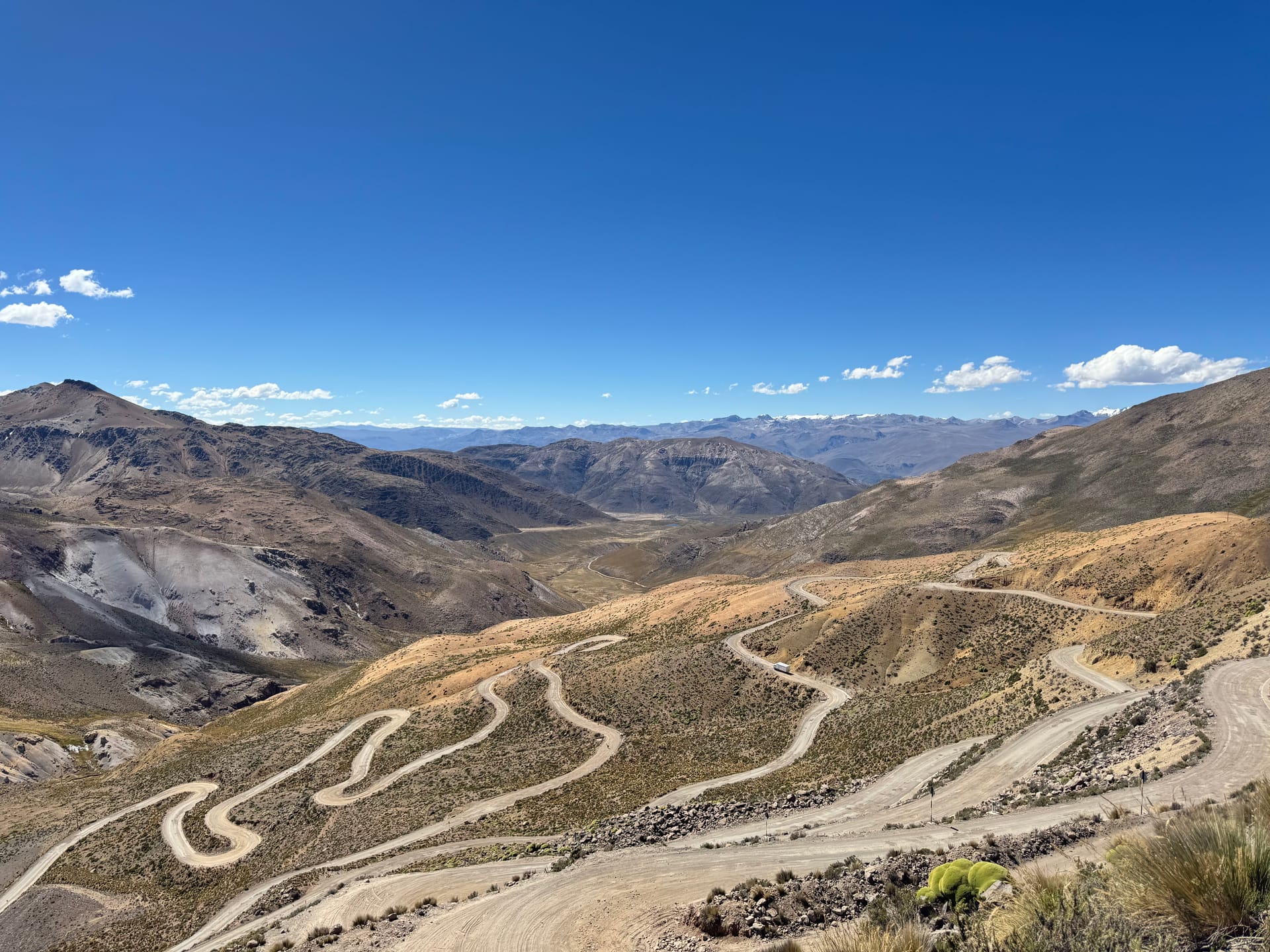
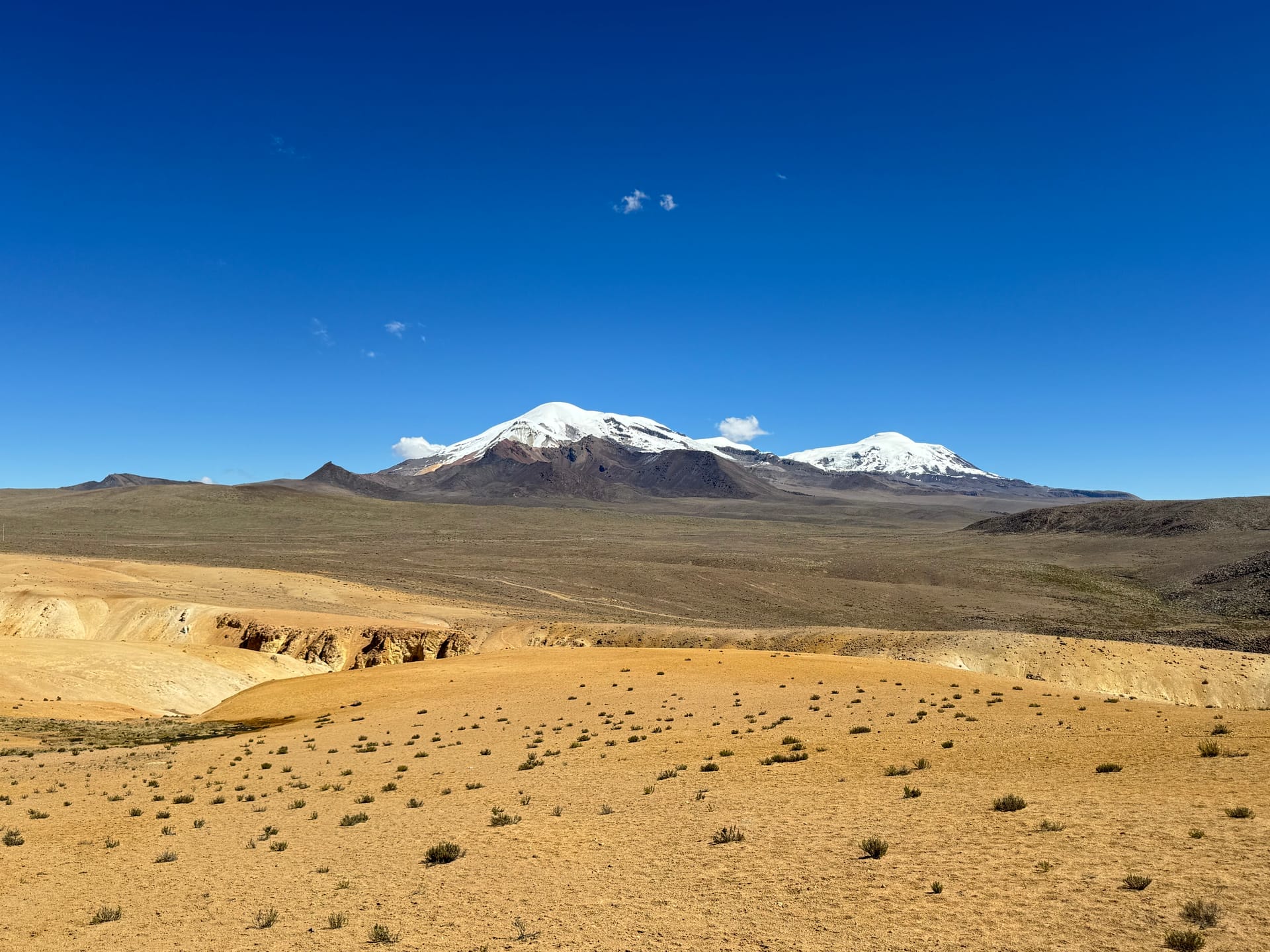
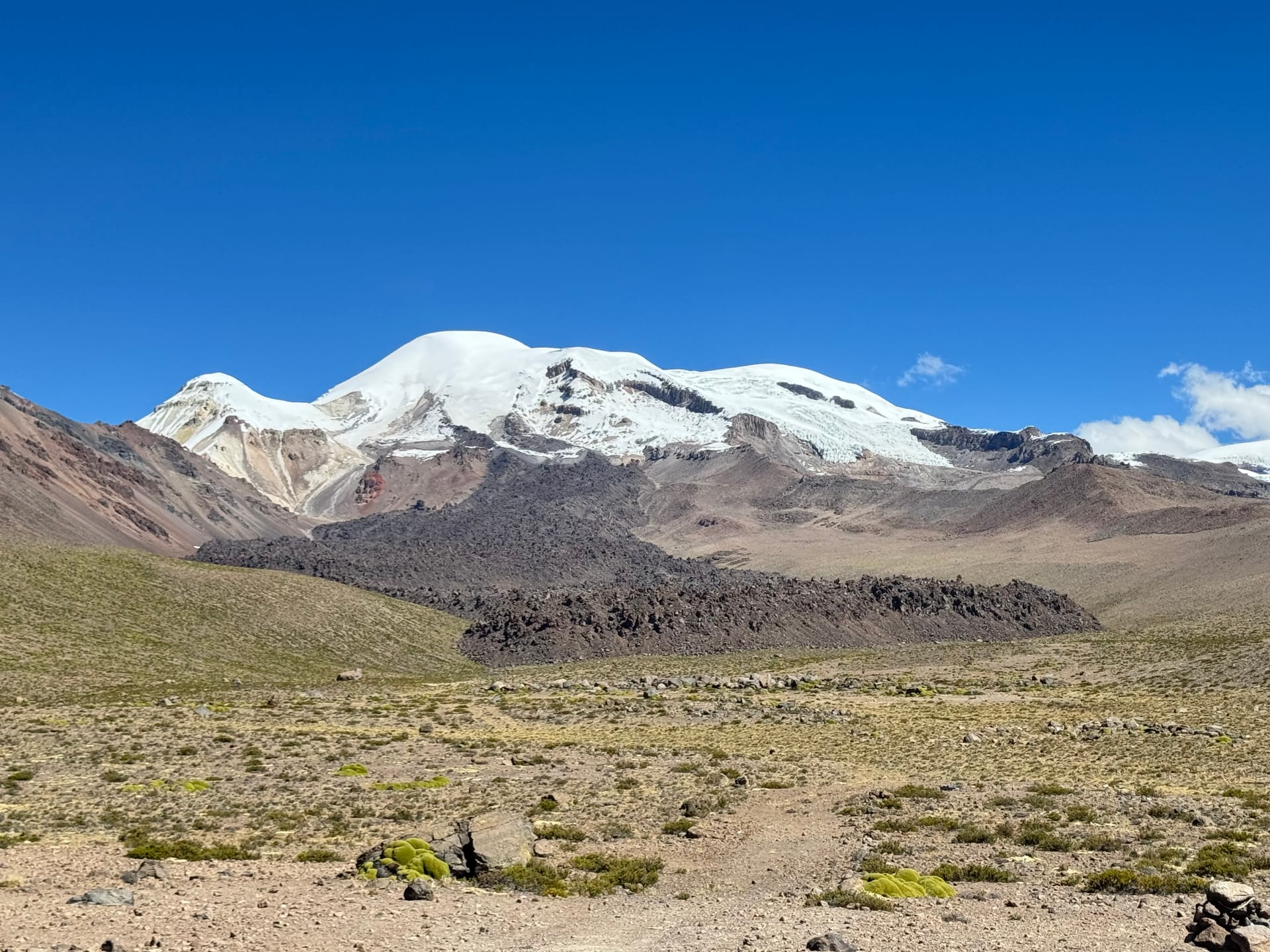
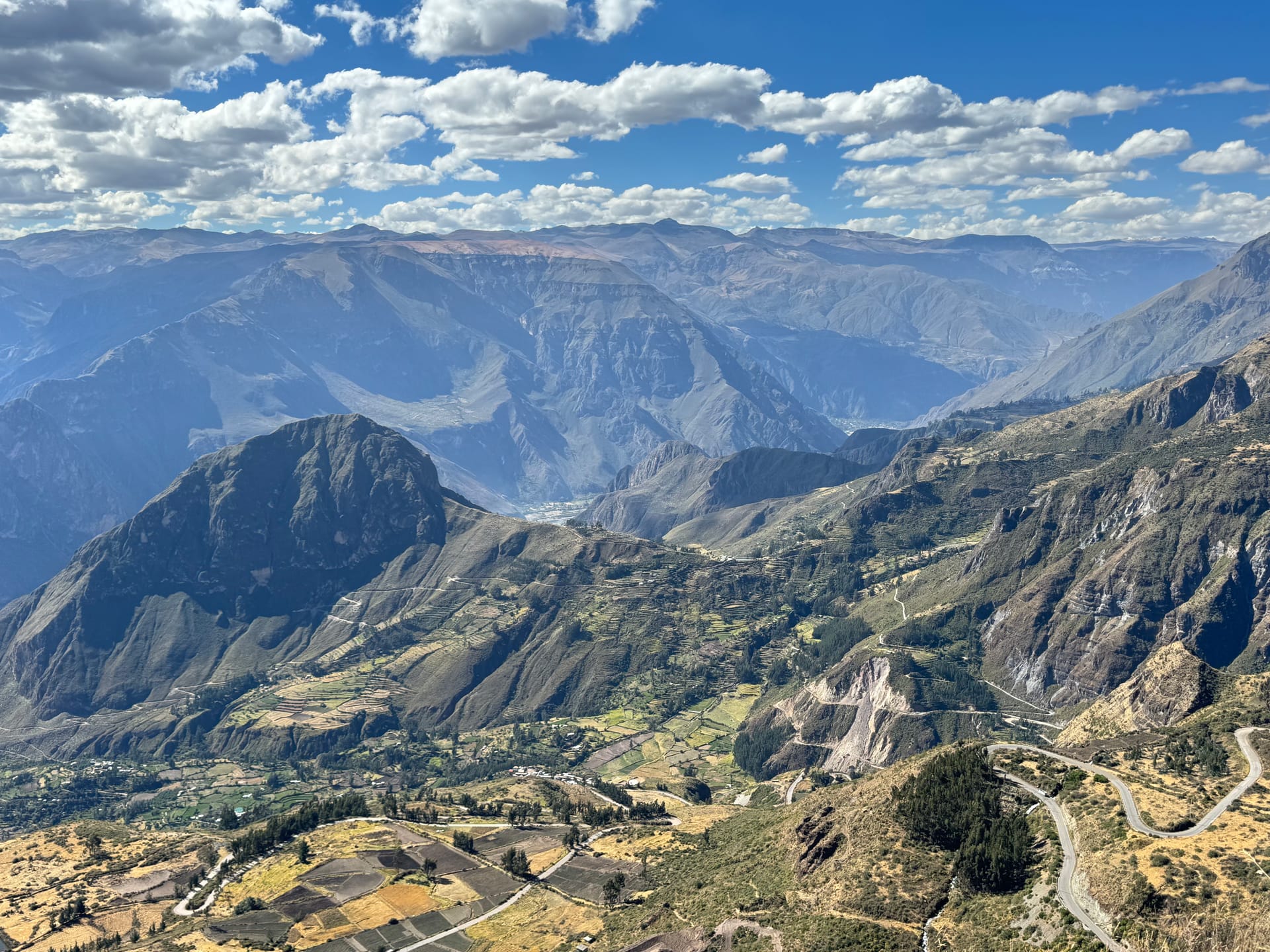
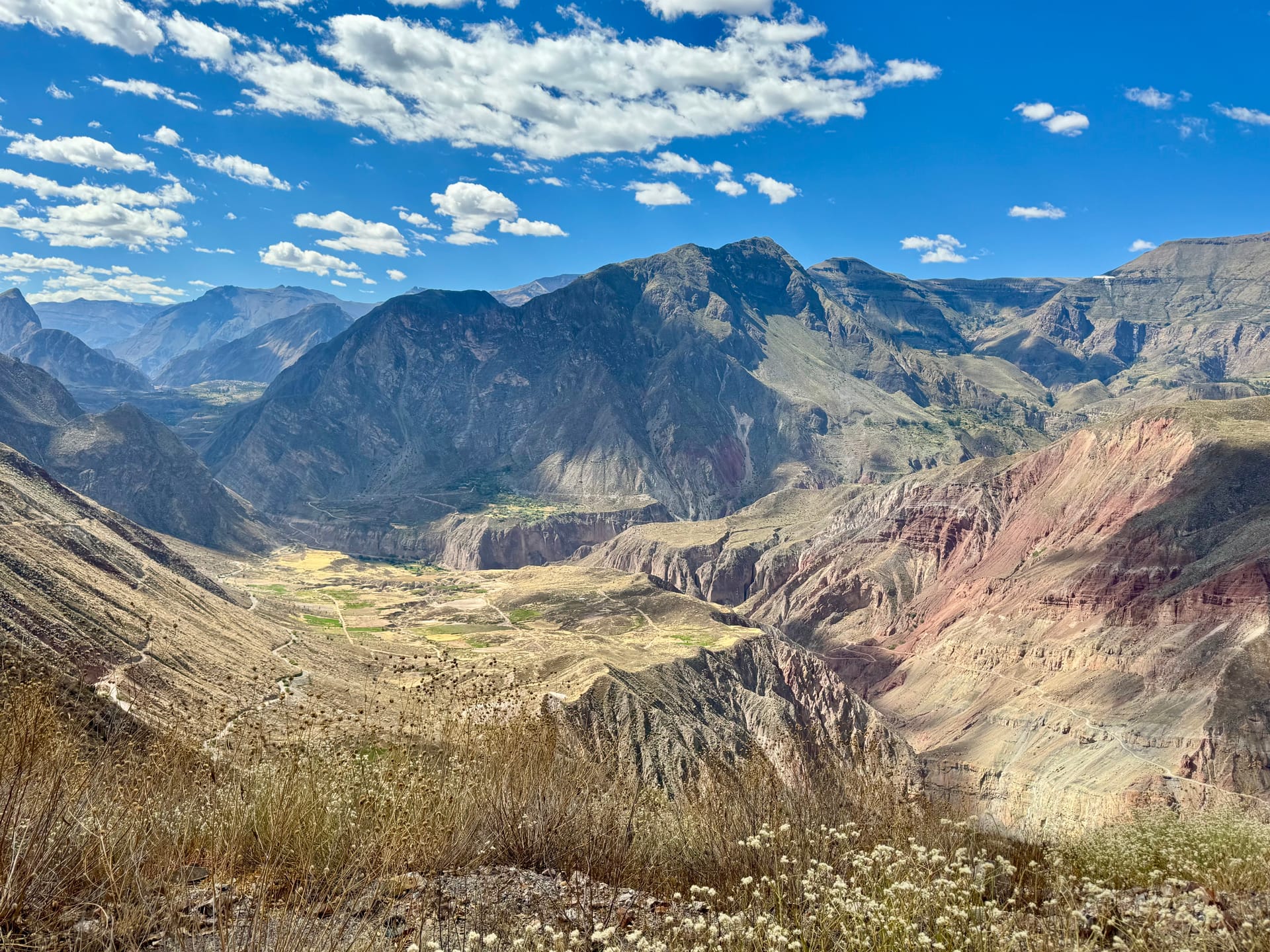
On June 30th, we head into the Cotahuasi canyon. On paper, it's asphalt. In reality, there are potholes everywhere, sand in the hairpins, and all we do is go up and down the valley. It's very beautiful, but it's long. In Oyolo, as expected, there's nothing to eat, so we have a picnic. Given the state of the road and the number of hairpins, the last 80 kilometers take us three hours. We reach Pauza at 5:30 p.m. with incredibly sore backsides. The Cotahuasi canyon is beautiful, but we'll have spent 200 km going down and back up the mountainsides. Not a single straight line or flat stretch... we love the mountains, but it wasn't exactly restful.
On the village square, we stumble upon the Pampinito hotel, which has a garage. Needless to say, we don't spend long looking for a place to sleep. We drop our things and head back out to the square for a snack. It's easy here, there are food stalls everywhere, we're spoiled for choice. We stop at a stall and meet a teacher who starts speaking English with us to practice, so the vendor thinks we're American. We switch between English and Spanish with approximate sentences, but everyone comes away with a little something. She invites us to her school's party on Thursday. But we've only just got back on the road, we don't feel like stopping.
Puquio and the soft dirt of Chaviña
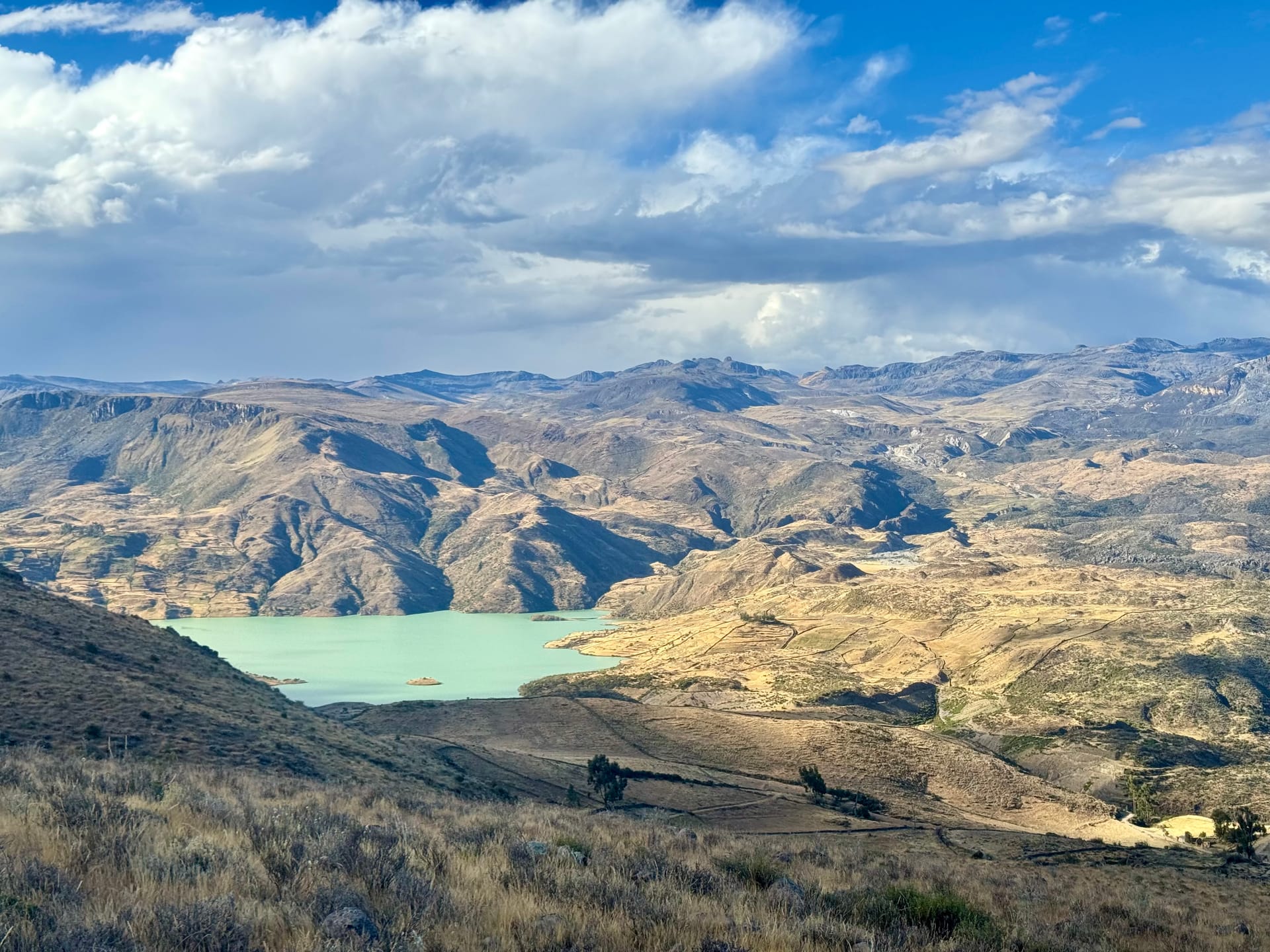
"There are lots and lots of bends," the hotel manager warns us this morning as we're about to set off. Google says 6 hours to Puquio, but he thinks it'll take longer. After yesterday, we're not exactly enthusiastic, but we'll see, we need to make progress. In reality, the road is better than the day before, we even get 200 m of straight line. A feat. The landscapes are gorgeous and we wonder where all the riders visiting Peru have gone.
At lunchtime we stop in Cora Cora. A local tells us the road we planned to take is closed until 6 p.m. and suggests a detour via Negro Mayo and the Panamericana. On the way, we ask the locals and apparently it's open. The road is so beautiful with its brand-new asphalt that we don't want to take the suggested detour, especially since it would put us on the Panamericana, which we'd rather avoid. Unfortunately, after twenty kilometers we reach Chaviña and there are indeed roadworks. But the road isn't closed until 6 p.m., we have to wait a bit but we can get through. As we enter, we discover the roadworks zone is covered with freshly turned dirt, not packed down at all, which is pretty tricky on a motorcycle. To make things harder, trucks come from the other direction on a fairly narrow lane and force their way through. We end up riding on the softest part instead of in the tire tracks. Thomas makes it. Adeline ends up in the trench to let the trucks pass, and they brush past her. When she sets off again, the rear wheel slides sideways: the front on firm ground, the rear in the soft stuff... she handles it and gets out without falling. We made it, but it wasn't fun. Then we ride 80 km of dirt track instead of the hoped-for asphalt, but it goes fine. There's little traffic, and once again the landscapes around us are superb.
We finally reach Puquio, where we find the hotel "Los Andes" thanks to iOverlander. It's a busy transit town, since the road linking the coast to Cusco runs through it. We're far from the quiet villages of the last few days. In the evening we're starving, so we go for a burger. Adeline orders a classic burger and gets a Hawaiian one. No way! She sends it back, but she'd bet it's the same one coming back from the kitchen, minus the pineapple slice. At night it's very cold in town, we're still at altitude and you feel it once the sun is gone. Like everywhere in Peru, there's no heating in the room, you have to pay extra for a space heater... we decide to go to bed and stay warm under the covers!
Nazca and the coast road
To reach Nazca, we don't really have any choice but to take the Panamericana. We have to admit there are some nice twisties on smooth asphalt, but also lots of trucks to overtake. We get there fairly quickly, and at the hotel we meet two riders with Paraguayan plates. Thomas chats with the guy for a long time: they're actually German. You'd think half of Paraguay is German. We don't think to invite them to dinner and spend the evening on our own. We talk a lot about meeting people while traveling and how important it is, but the reality is that connecting isn't always easy. Sometimes we're tired, sometimes we're afraid of bothering people. Afterwards we regret it, but it's like choosing routes: you can't go back. You have to take the moment as it comes.
The next morning, we go for breakfast at the café where we stopped the day before, and luckily Adeline gets back the sunglasses she'd left there. Oops. While packing, it's Thomas's turn to lose his motorcycle jacket. We quickly realize he left it at the restaurant where we had dinner, but it's closed until 2 p.m. Fortunately, the owner is on the sidewalk, recognizes Adeline and calls Franklin, who comes to let us in. We're as bad as each other.
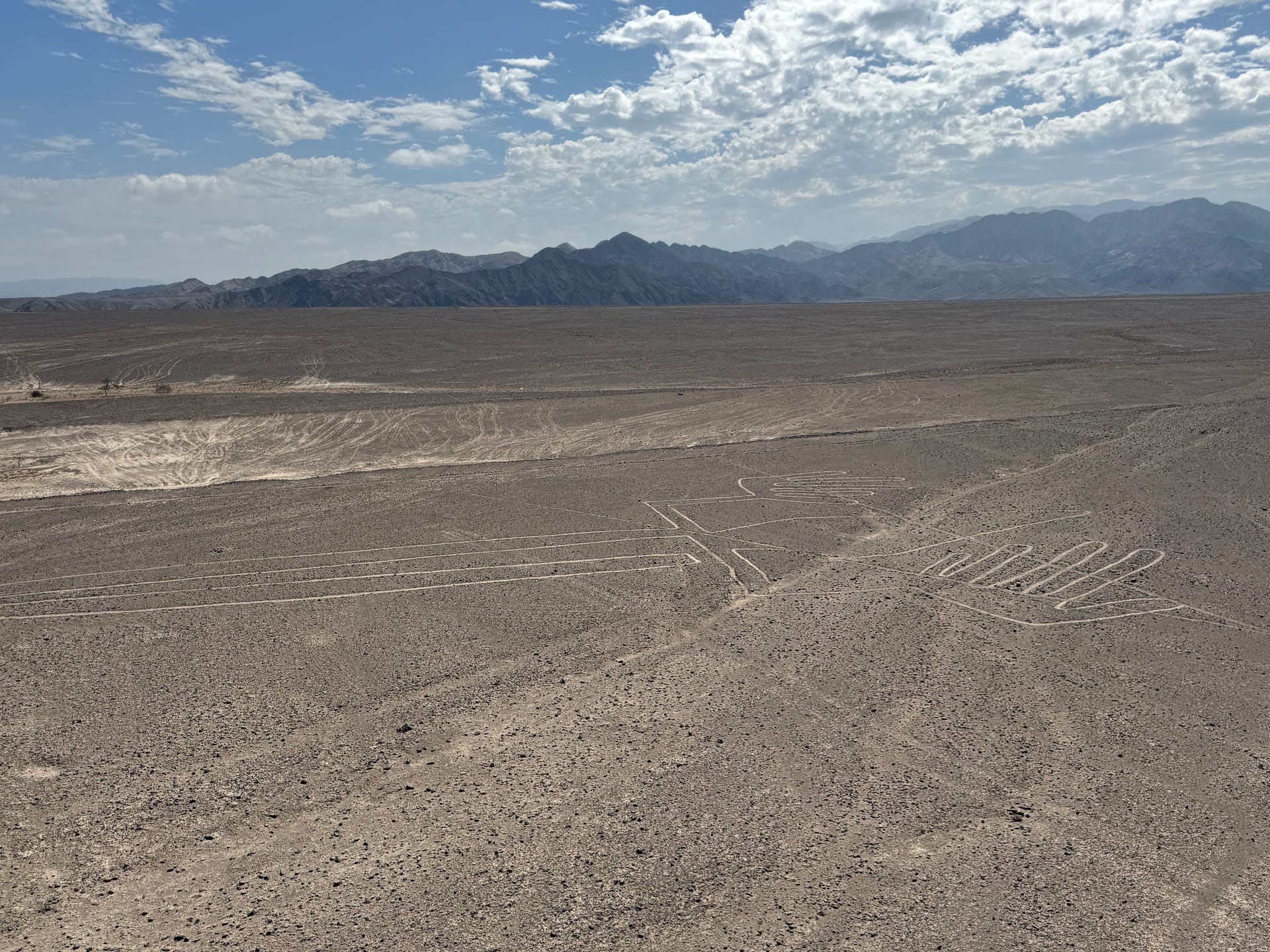
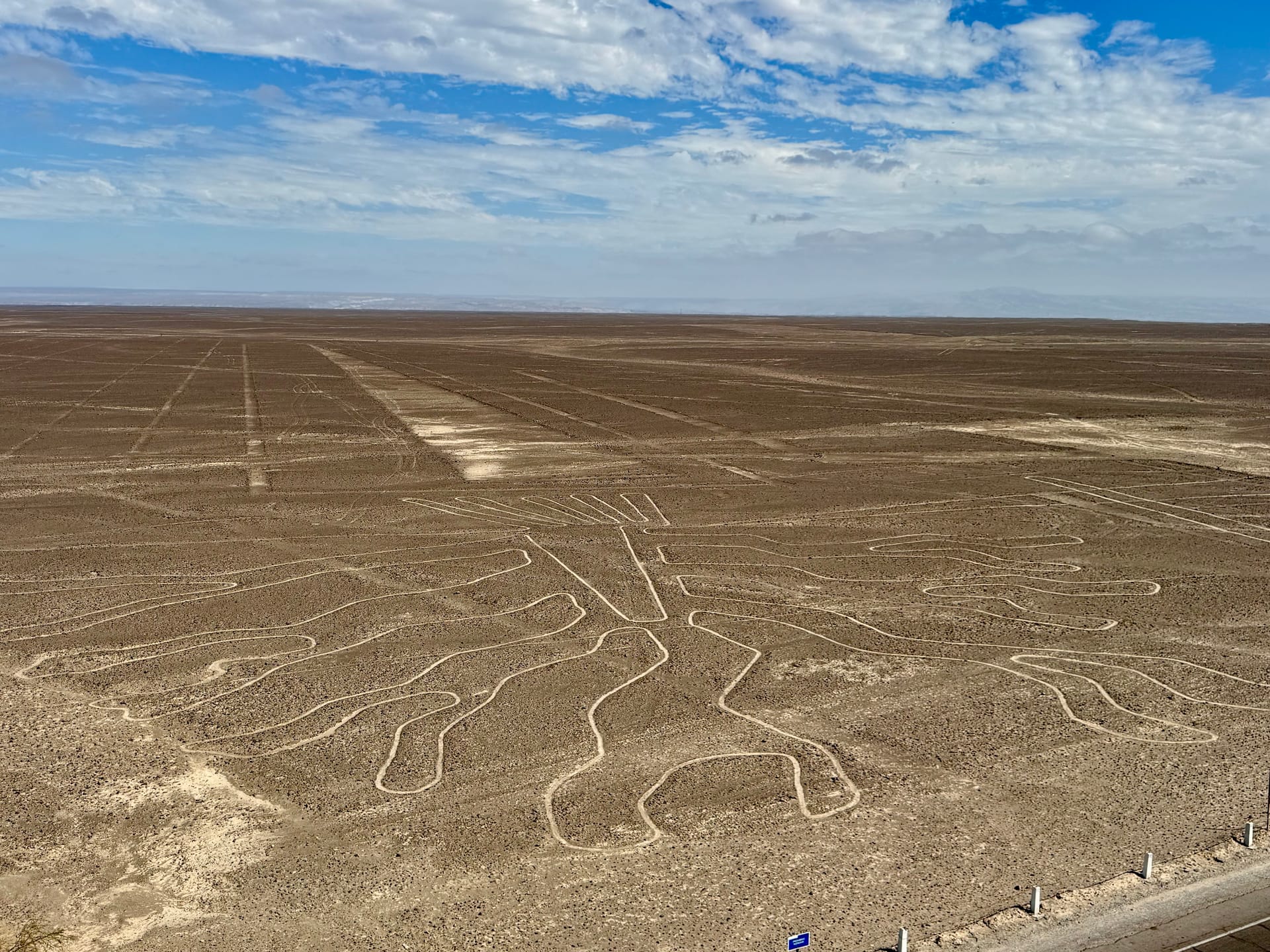
The Nazca lines disappoint us: they're smaller than we imagined and the Panamericana runs right through one of the figures. We don't linger. On the way to Ica, what strikes us most is the trash. It's everywhere along the road and it stinks. We'd already noticed this in Vietnam, and it makes us question environmental education, and the point of our efforts in France when, elsewhere, nothing seems to follow. We don't have the answer, but it bothers us.
Ica, at Guillaume's
In Ica, the traffic reaches new heights. Mototaxis on the right, on the left, we can't tell if there are two or three lanes, horns blaring in every direction. We arrive at Guillaume's on edge. But the welcome is easygoing, as if we'd known each other forever. In the evening, we have dinner at the "Bistrot Bastille", his restaurant, which is a French bistro: cocktail, wine, main course and dessert. After 8 months on the road, we treat ourselves and it feels great!
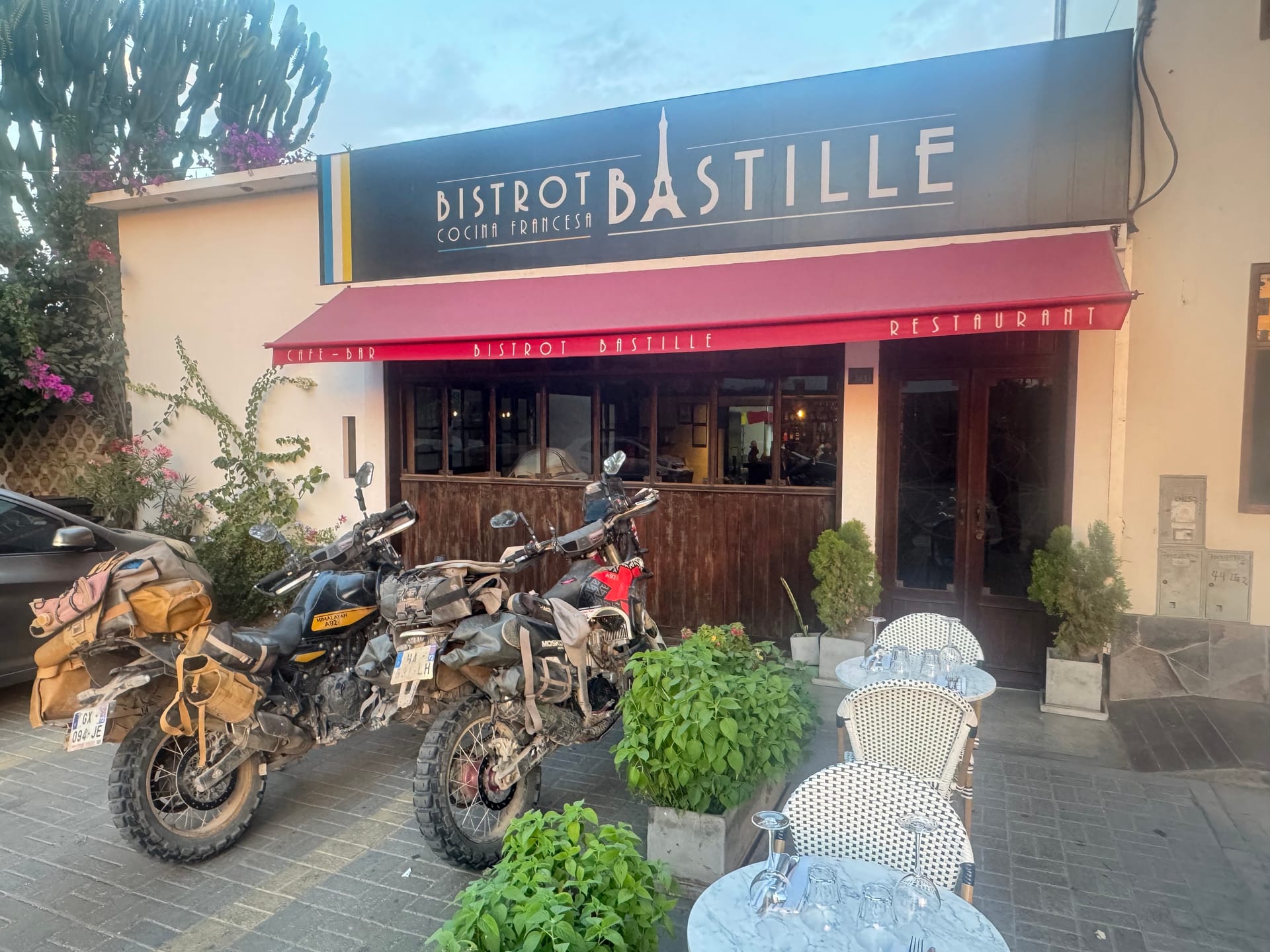
The next day, we go hunting for motorcycle parts. We're looking for an inner tube and a chain kit for Thomas. The shops display "repuestos" on their storefronts but have nothing in stock. Even a standard-size inner tube is impossible to find. After two hours, we come back empty-handed and a bit dejected. On top of that, getting around Ica turns out to be particularly difficult. Thomas gets cut off and narrowly avoids an accident. That's when we decide we'll go to Lima by bus, if Guillaume is happy to keep our bikes.
In the afternoon, we go to watch France-Paraguay in Huacachina, the oasis surrounded by dunes. Hard not to follow the World Cup when football is a true passion in Latin America! We have to say we're rather disappointed. Behind the beautiful photos, it's mostly a village packed with tourists where you get hassled for quad tours on every corner. It kind of breaks the myth. We watch France win, but we're the only ones happy with the score! In the evening, we go back to the "Bistrot Bastille" and feast on boeuf bourguignon. Amazing. While Adeline is tired, Thomas sets the world to rights with Guillaume until late at night.
On Sunday, Adeline takes advantage of being not far from Paracas to visit her parents, who are staying there. Thomas tinkers with the bikes and has lunch at a bodega with Guillaume's family. It's our last day in Ica, tomorrow we're heading to Lima.
Lima by bus, between kendo and empty shops
We take the bus to Lima with Cruz del Sur, which has a good safety reputation. Arriving in Lima is a shock, it doesn't feel like Peru. Sure, we chose a place in the Miraflores neighborhood, popular with tourists because it's safe. Still, the capital surprises us.
Miraflores is modern and clean, it feels like Europe. Even Lima's historic center has nothing in common with Arequipa or Cusco. There's a gap between the capital and the rest of the country, like everywhere, but here it's really two worlds. The people we meet confirm it: Lima is a third of the country's population and life here is very different from other cities. We better understand the election results, which were very divided between the capital's votes and the provinces'.
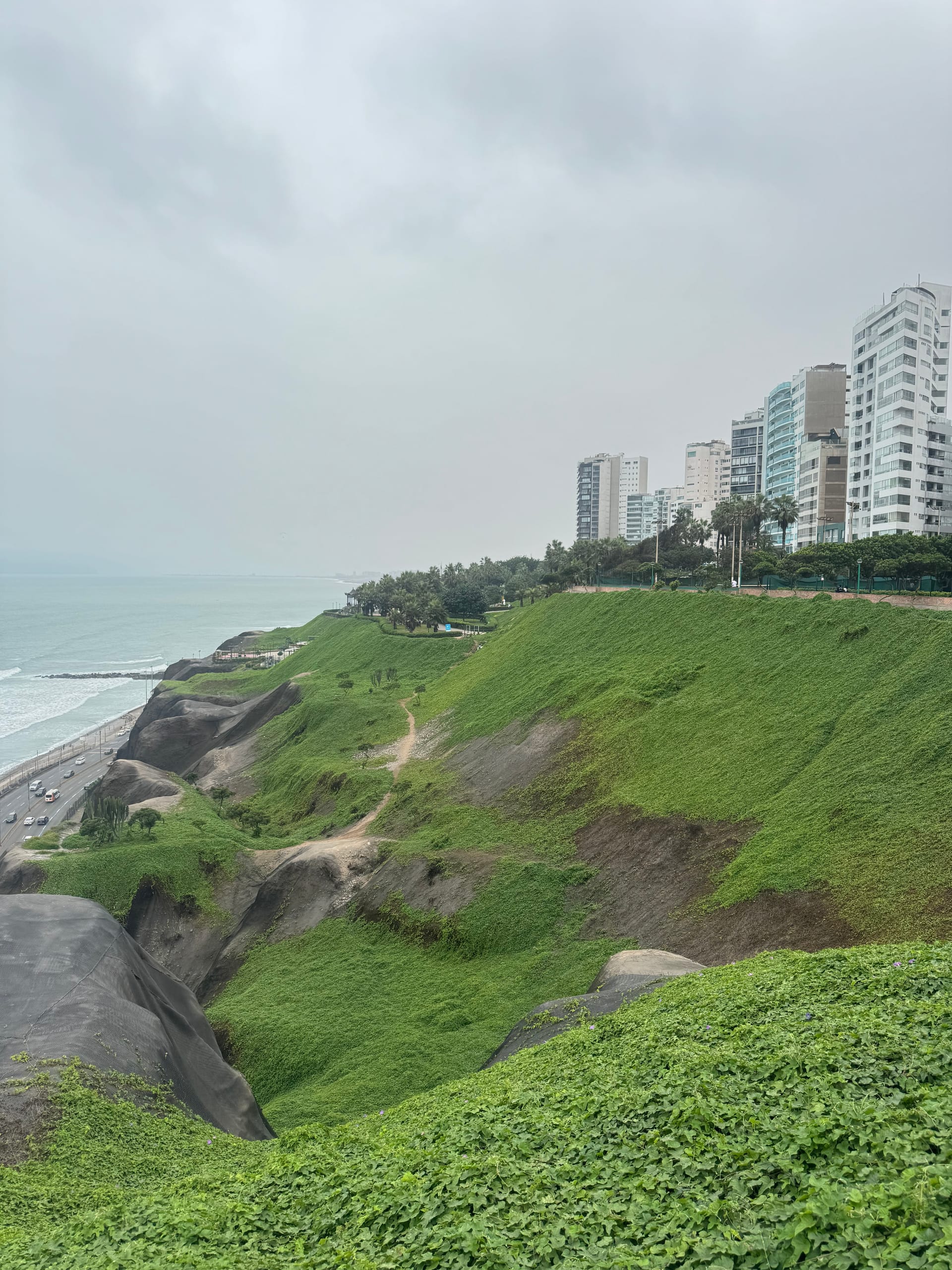
For our first day in Lima, we plan to go around the motorcycle shops to find the parts we need to continue the trip with peace of mind. Adeline finds what she needs for the Himalayan. Thomas, on the other hand, leaves without air filters or a chain kit. A KTM dealer does have the front and rear sprockets in its catalog, but no stock. They can order them, but it takes three months to get them. We wonder how local owners manage. We won't even find oil in the capital. We hope it'll be easier to find parts in Ecuador, otherwise we'll see in Colombia.
Luckily, there's kendo. We haven't practiced in ages, but there's no way we're missing this: the sensei is a 7th dan and practices jodan. Martin and the other kenshi are welcoming, and we come out tired and happy.
On Wednesday, we go to discover Lima's historic center. We have to admit we're not big fans of capitals. Apart from Buenos Aires, which we really liked, we often leave a bit disappointed, and Lima is no exception. Nothing beats the charm of the countryside. In the evening, we meet up with some bitcoiners in a bar. The atmosphere is nice, but we're drained by the city and the traffic, and we don't enjoy it as much as we'd like. That's life.
On Thursday, we watch France-Morocco at the Alliance Française with Adeline's parents, surrounded by fans (the only Morocco supporter gets some friendly teasing). A last coffee with Patrice and Patricia, who fly back to France the next day, then one last kendo session, Adeline with a cold and Thomas aching all over. We didn't feel like going, but as usual, we come out delighted.
On Friday, four hours by bus back to Ica, one last dinner at the Bistrot Bastille, and the chains greased. The cities have worn us out: traffic, noise, a feeling of insecurity. Tomorrow, we head back up into the mountains and we can't wait!
Follow our adventures
Get an email for every new article.